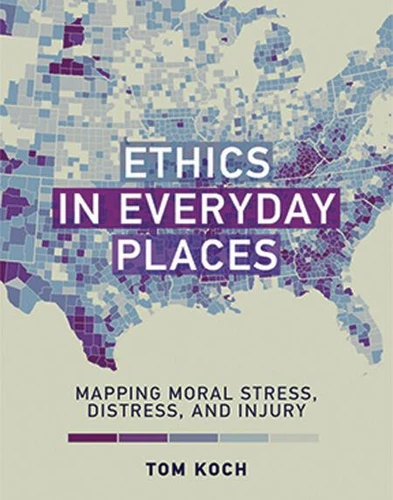
Ethics in Everyday Places. Mapping Moral Stress, Distress, and Injury (Basic Bioethics)
Par :Formats :
Disponible dans votre compte client Decitre ou Furet du Nord dès validation de votre commande. Le format ePub protégé est :
- Compatible avec une lecture sur My Vivlio (smartphone, tablette, ordinateur)
- Compatible avec une lecture sur liseuses Vivlio
- Pour les liseuses autres que Vivlio, vous devez utiliser le logiciel Adobe Digital Edition. Non compatible avec la lecture sur les liseuses Kindle, Remarkable et Sony
- Non compatible avec un achat hors France métropolitaine
 , qui est-ce ?
Notre partenaire de plateforme de lecture numérique où vous retrouverez l'ensemble de vos ebooks gratuitement
Pour en savoir plus sur nos ebooks, consultez notre aide en ligne ici
C'est si simple ! Lisez votre ebook avec l'app Vivlio sur votre tablette, mobile ou ordinateur :

- Nombre de pages288
- FormatePub
- ISBN978-0-262-34391-6
- EAN9780262343916
- Date de parution12/01/2018
- Protection num.Adobe DRM
- Taille10 Mo
- Infos supplémentairesepub
- ÉditeurThe MIT Press
Résumé
An exploration of moral stress, distress, and injuries inherent in modern society through the maps that pervade academic and public communications worlds. In Ethics in Everyday Places, ethicist and geographer Tom Koch considers what happens when, as he puts it, "you do everything right but know you've done something wrong." The resulting moral stress and injury, he argues, are pervasive in modern Western society.
Koch makes his argument "from the ground up, " from the perspective of average persons, and through a revealing series of maps in which issues of ethics and morality are embedded. The book begins with a general grounding in both moral stress and mapping as a means of investigation. The author then examines the ethical dilemmas of mapmakers and others in the popular media and the sciences, including graphic artists, journalists, researchers, and social scientists.
Koch expands from the particular to the general, from mapmaker and journalist to the readers of maps and news. He explores the moral stress and injury in educational funding, poverty, and income inequality ("Why aren't we angry that one in eight fellow citizens lives in federally certified poverty?"), transportation modeling (seen in the iconic map of the London transit system and the hidden realities of exclusion), and U.
S. graft organ transplantation. This uniquely interdisciplinary work rewrites our understanding of the nature of moral stress, distress and injury, and ethics in modern life. Written accessibly and engagingly, it transforms how we think of ethics-personal and professional-amid the often conflicting moral injunctions across modern society. Copublished with Esri Press
Koch makes his argument "from the ground up, " from the perspective of average persons, and through a revealing series of maps in which issues of ethics and morality are embedded. The book begins with a general grounding in both moral stress and mapping as a means of investigation. The author then examines the ethical dilemmas of mapmakers and others in the popular media and the sciences, including graphic artists, journalists, researchers, and social scientists.
Koch expands from the particular to the general, from mapmaker and journalist to the readers of maps and news. He explores the moral stress and injury in educational funding, poverty, and income inequality ("Why aren't we angry that one in eight fellow citizens lives in federally certified poverty?"), transportation modeling (seen in the iconic map of the London transit system and the hidden realities of exclusion), and U.
S. graft organ transplantation. This uniquely interdisciplinary work rewrites our understanding of the nature of moral stress, distress and injury, and ethics in modern life. Written accessibly and engagingly, it transforms how we think of ethics-personal and professional-amid the often conflicting moral injunctions across modern society. Copublished with Esri Press