
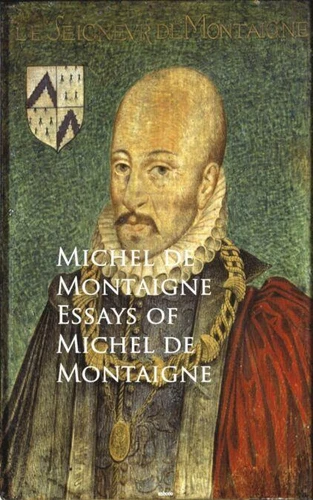
Essays of Michel de Montaigne. Bestsellers and famous Books
Par :Formats :
Disponible dans votre compte client Decitre ou Furet du Nord dès validation de votre commande. Le format ePub est :
- Compatible avec une lecture sur My Vivlio (smartphone, tablette, ordinateur)
- Compatible avec une lecture sur liseuses Vivlio
- Pour les liseuses autres que Vivlio, vous devez utiliser le logiciel Adobe Digital Edition. Non compatible avec la lecture sur les liseuses Kindle, Remarkable et Sony
 , qui est-ce ?
Notre partenaire de plateforme de lecture numérique où vous retrouverez l'ensemble de vos ebooks gratuitement
Pour en savoir plus sur nos ebooks, consultez notre aide en ligne ici
C'est si simple ! Lisez votre ebook avec l'app Vivlio sur votre tablette, mobile ou ordinateur :

- Nombre de pages1524
- FormatePub
- ISBN978-3-7364-1755-7
- EAN9783736417557
- Date de parution26/10/2016
- Protection num.Digital Watermarking
- Taille2 Mo
- Infos supplémentairesepub
- ÉditeurAndhof
Résumé
In his own lifetime, Montaigne was admired more as a statesman than as an author. The tendency in his essays to digress into anecdotes and personal ruminations was seen as detrimental to proper style rather than as an innovation, and his declaration that, "I am myself the matter of my book", was viewed by his contemporaries as self-indulgent. In time, however, Montaigne would come to be recognized as embodying, perhaps better than any other author of his time, the spirit of freely entertaining doubt which began to emerge at that time.
He is most famously known for his skeptical remark, "Que sçay-je?" ("What do I know?", in Middle French; now rendered as Que sais-je? in modern French). Remarkably modern even to readers today, Montaigne's attempt to examine the world through the lens of the only thing he can depend on implicitly-his own judgment-makes him more accessible to modern readers than any other author of the Renaissance.
Much of modern literary non-fiction has found inspiration in Montaigne and writers of all kinds continue to read him for his masterful balance of intellectual knowledge and personal storytelling.
He is most famously known for his skeptical remark, "Que sçay-je?" ("What do I know?", in Middle French; now rendered as Que sais-je? in modern French). Remarkably modern even to readers today, Montaigne's attempt to examine the world through the lens of the only thing he can depend on implicitly-his own judgment-makes him more accessible to modern readers than any other author of the Renaissance.
Much of modern literary non-fiction has found inspiration in Montaigne and writers of all kinds continue to read him for his masterful balance of intellectual knowledge and personal storytelling.
A propos de Michel de Montaigne



1,99 €
Essays
E-book
1,99 €
8,49 €
1,49 €
Complete Essays
E-book
2,99 €
0,49 €
The Complete Essays
E-book
0,49 €