SOLDES
Jusqu'à -70% sur une sélection d'articles*

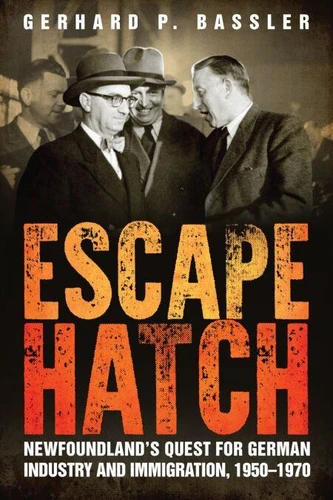
Escape Hatch. Newfoundland’s Quest for German Industry and Immigration, 1950–1970
Par :Formats :
Disponible dans votre compte client Decitre ou Furet du Nord dès validation de votre commande. Le format ePub est :
- Compatible avec une lecture sur My Vivlio (smartphone, tablette, ordinateur)
- Compatible avec une lecture sur liseuses Vivlio
- Pour les liseuses autres que Vivlio, vous devez utiliser le logiciel Adobe Digital Edition. Non compatible avec la lecture sur les liseuses Kindle, Remarkable et Sony
 , qui est-ce ?
Notre partenaire de plateforme de lecture numérique où vous retrouverez l'ensemble de vos ebooks gratuitement
Pour en savoir plus sur nos ebooks, consultez notre aide en ligne ici
C'est si simple ! Lisez votre ebook avec l'app Vivlio sur votre tablette, mobile ou ordinateur :

- FormatePub
- ISBN978-1-77117-614-9
- EAN9781771176149
- Date de parution17/02/2017
- Protection num.Digital Watermarking
- Taille14 Mo
- Infos supplémentairesepub
- ÉditeurFlanker Press
Résumé
"Beggars cannot be choosers. We wanted just companies, we gave a damn who they were, we had no prejudice against them. We went to Germany because Europe was scared of Soviet Russia and saw a communist revolution coming. The German industrialists were particularly scared. In 1950 I was the first public visitor who came to Germany from any country. The leaders of the German companies all spoke excellent English.
I was impressed. I took every opportunity to speak to them and tell them that they should come to Newfoundland: "I've got an escape hatch for you, get established in my part of Canada, start a branch of your company in Newfoundland so you can have an escape hatch." It was shrewd on my part. It fitted their mood. - Joseph R. Smallwood After Newfoundland joined Canada in 1949, Premier J. R. Smallwood believed that industrialization would prevent a mass exodus from the economically backward province to mainland Canada in search of employment.
Escape Hatch traces Smallwood's recruitment of each individual industry from the perspectives of both the Newfoundland government and the foreign industrialists. The book examines the conditions under which each of these industries operated and the reasons for their successes and failures. This is the first in-depth account of how and why the Newfoundland government acquired 17 so-called New Industries-13 from Germany, one from Austria, one from Latvia, one from England, and one from Newfoundland-as well as the 1, 000 or so immigrants who came to Newfoundland and Labrador in the 1950s and 1960s as a result of Smallwood's initiative."
I was impressed. I took every opportunity to speak to them and tell them that they should come to Newfoundland: "I've got an escape hatch for you, get established in my part of Canada, start a branch of your company in Newfoundland so you can have an escape hatch." It was shrewd on my part. It fitted their mood. - Joseph R. Smallwood After Newfoundland joined Canada in 1949, Premier J. R. Smallwood believed that industrialization would prevent a mass exodus from the economically backward province to mainland Canada in search of employment.
Escape Hatch traces Smallwood's recruitment of each individual industry from the perspectives of both the Newfoundland government and the foreign industrialists. The book examines the conditions under which each of these industries operated and the reasons for their successes and failures. This is the first in-depth account of how and why the Newfoundland government acquired 17 so-called New Industries-13 from Germany, one from Austria, one from Latvia, one from England, and one from Newfoundland-as well as the 1, 000 or so immigrants who came to Newfoundland and Labrador in the 1950s and 1960s as a result of Smallwood's initiative."