


Professor of the Hungarian Dance University Ilona Kovács obtained her PhD degree at the Liszt Ferenc Academy of Music. Her doctoral research focused on Dohnányi's music, especially his chamber pieces. For years she has examined not only the primary sources available in the National Széchényi Library in Budapest but also the autograph sketches held in the British Library in London, which opened a new perspective in the study of the Dohnányi manuscripts.
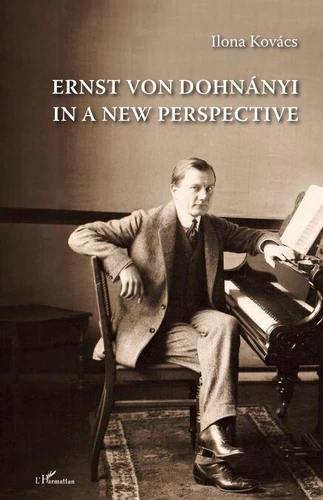
The important outcome of nearly a quarter-century's worth of research, including groundwork, is the volume entitled Ernst von Dohnányi in a New Perspective, a collection of studies published in the past fifteen years. Using the tools of modern musicology, the researcher illuminates the so-far unknown facets of the ouvre with studies arranged into four thematic groups. The scholarly achievement of this volume has considerably enriched Dohnányi-research in Hungary.
The author cherishes the hope that the book's conclusions will have an impact on the attitudes of the performers of his pieces and on music education from the most basic to the highest levels.
The important outcome of nearly a quarter-century's worth of research, including groundwork, is the volume entitled Ernst von Dohnányi in a New Perspective, a collection of studies published in the past fifteen years. Using the tools of modern musicology, the researcher illuminates the so-far unknown facets of the ouvre with studies arranged into four thematic groups. The scholarly achievement of this volume has considerably enriched Dohnányi-research in Hungary.
The author cherishes the hope that the book's conclusions will have an impact on the attitudes of the performers of his pieces and on music education from the most basic to the highest levels.