SOLDES
Jusqu'à -70% sur une sélection d'articles*

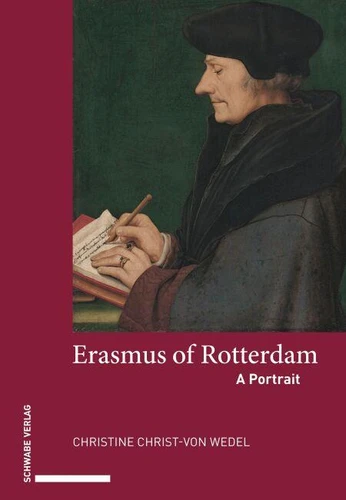
Erasmus of Rotterdam. A Portrait.
Par :Formats :
Disponible dans votre compte client Decitre ou Furet du Nord dès validation de votre commande. Le format PDF est :
- Compatible avec une lecture sur My Vivlio (smartphone, tablette, ordinateur)
- Compatible avec une lecture sur liseuses Vivlio
- Pour les liseuses autres que Vivlio, vous devez utiliser le logiciel Adobe Digital Edition. Non compatible avec la lecture sur les liseuses Kindle, Remarkable et Sony
 , qui est-ce ?
Notre partenaire de plateforme de lecture numérique où vous retrouverez l'ensemble de vos ebooks gratuitement
Pour en savoir plus sur nos ebooks, consultez notre aide en ligne ici
C'est si simple ! Lisez votre ebook avec l'app Vivlio sur votre tablette, mobile ou ordinateur :

- Nombre de pages175
- FormatPDF
- ISBN978-3-7965-4226-8
- EAN9783796542268
- Date de parution01/09/2020
- Protection num.Digital Watermarking
- Taille2 Mo
- Infos supplémentairespdf
- ÉditeurSchwabe & Co
Résumé
Erasmus of Rotterdam (1466/67-1536) remains, for good reason, the best-known humanist of his time. He influenced reformers, philosophers, politicians, literati, legal scholars, educators, artists and musicians in his own as well as in later centuries and covered an astonishingly broad range of topics: war and peace, politics and human dignity, jurisdiction and philosophy of law, church music and homiletics, piety and common wisdom, style and manners, as well as questions of matrimony, gender and education.
Indeed, Erasmine thought continues to influence European intellectual history to this day. Christine Christ-von Wedel introduces Erasmus as a personality but also expands on his rich and multi-layered thinking and the struggles and longings in the age of Reformation characterised by his clashes with both Martin Luther and the Catholic establishment.
Indeed, Erasmine thought continues to influence European intellectual history to this day. Christine Christ-von Wedel introduces Erasmus as a personality but also expands on his rich and multi-layered thinking and the struggles and longings in the age of Reformation characterised by his clashes with both Martin Luther and the Catholic establishment.