SOLDES
Jusqu'à -70% sur une sélection d'articles*

Nouveauté
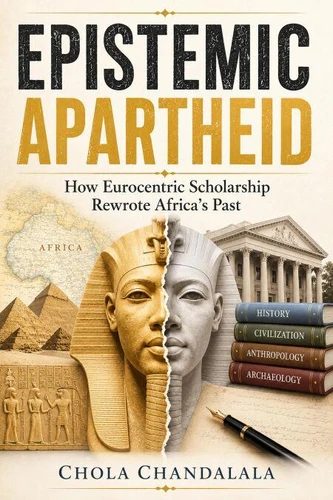
EPISTEMIC APARTHEID: How Eurocentric Scholarship Rewrote Africa's Past. Afrocentric Perspectives, #2
Par :Formats :
Disponible dans votre compte client Decitre ou Furet du Nord dès validation de votre commande. Le format ePub est :
- Compatible avec une lecture sur My Vivlio (smartphone, tablette, ordinateur)
- Compatible avec une lecture sur liseuses Vivlio
- Pour les liseuses autres que Vivlio, vous devez utiliser le logiciel Adobe Digital Edition. Non compatible avec la lecture sur les liseuses Kindle, Remarkable et Sony
 , qui est-ce ?
Notre partenaire de plateforme de lecture numérique où vous retrouverez l'ensemble de vos ebooks gratuitement
Pour en savoir plus sur nos ebooks, consultez notre aide en ligne ici
C'est si simple ! Lisez votre ebook avec l'app Vivlio sur votre tablette, mobile ou ordinateur :

- FormatePub
- ISBN8235232341
- EAN9798235232341
- Date de parution01/07/2026
- Protection num.pas de protection
- Infos supplémentairesepub
- ÉditeurIoakim Ioakim
Résumé
Who decides what counts as history? Who decides whose knowledge is credible? And why has Africa so often been excluded from the story of civilization?For centuries, the achievements, philosophies, and intellectual traditions of Africa have been filtered through Eurocentric frameworks that often privileged European interpretations while dismissing African voices. In Epistemic Apartheid, Chola Chandalala argues that this pattern is not merely accidental-it reflects a long-standing imbalance in how knowledge has been produced, evaluated, and institutionalized.
Drawing on history, archaeology, biblical studies, anthropology, Egyptology, philosophy, and postcolonial scholarship, this provocative work examines how academic authority has shaped public understanding of Africa's past. It explores the standards by which evidence is accepted or rejected, the politics of peer review, the treatment of oral traditions, and the enduring influence of colonial assumptions within historical scholarship.
Rather than asking readers to accept Afrocentric claims uncritically, the book challenges them to ask a more fundamental question: Are all historical claims evaluated by the same standards of evidence?Inside, you'll discover:. Why some historical narratives become "accepted truth" while others remain marginalized.. How colonial-era assumptions continue to influence modern scholarship.. The debates surrounding Ancient Egypt, African civilizations, and the origins of knowledge..
The role of archaeology, linguistics, oral traditions, and classical sources in reconstructing African history.. How influential scholars-including Cheikh Anta Diop, Théophile Obenga, Martin Bernal, Ivan Van Sertima, and others-challenged established academic orthodoxies.. Why the struggle over Africa's past remains central to global conversations about identity, education, and intellectual justice.
Bold yet carefully documented, Epistemic Apartheid does not merely revisit familiar debates-it invites readers to reconsider how history itself is written, who has the authority to write it, and what is at stake when entire civilizations are denied equal standing in humanity's shared story. Whether you are a student, educator, historian, researcher, or simply a curious reader interested in African history, decolonization, and the politics of knowledge, this book offers a thought-provoking exploration of one of the most important intellectual debates of our time.
Drawing on history, archaeology, biblical studies, anthropology, Egyptology, philosophy, and postcolonial scholarship, this provocative work examines how academic authority has shaped public understanding of Africa's past. It explores the standards by which evidence is accepted or rejected, the politics of peer review, the treatment of oral traditions, and the enduring influence of colonial assumptions within historical scholarship.
Rather than asking readers to accept Afrocentric claims uncritically, the book challenges them to ask a more fundamental question: Are all historical claims evaluated by the same standards of evidence?Inside, you'll discover:. Why some historical narratives become "accepted truth" while others remain marginalized.. How colonial-era assumptions continue to influence modern scholarship.. The debates surrounding Ancient Egypt, African civilizations, and the origins of knowledge..
The role of archaeology, linguistics, oral traditions, and classical sources in reconstructing African history.. How influential scholars-including Cheikh Anta Diop, Théophile Obenga, Martin Bernal, Ivan Van Sertima, and others-challenged established academic orthodoxies.. Why the struggle over Africa's past remains central to global conversations about identity, education, and intellectual justice.
Bold yet carefully documented, Epistemic Apartheid does not merely revisit familiar debates-it invites readers to reconsider how history itself is written, who has the authority to write it, and what is at stake when entire civilizations are denied equal standing in humanity's shared story. Whether you are a student, educator, historian, researcher, or simply a curious reader interested in African history, decolonization, and the politics of knowledge, this book offers a thought-provoking exploration of one of the most important intellectual debates of our time.