SOLDES
Jusqu'à -70% sur une sélection d'articles*

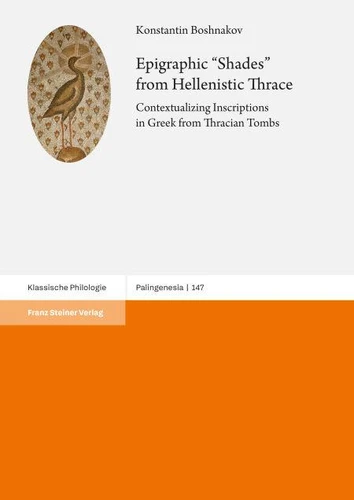
Epigraphic "Shades" from Hellenistic Thrace. Contextualizing Inscriptions in Greek from Thracian Tombs
Par :Formats :
Disponible dans votre compte client Decitre ou Furet du Nord dès validation de votre commande. Le format PDF est :
- Compatible avec une lecture sur My Vivlio (smartphone, tablette, ordinateur)
- Compatible avec une lecture sur liseuses Vivlio
- Pour les liseuses autres que Vivlio, vous devez utiliser le logiciel Adobe Digital Edition. Non compatible avec la lecture sur les liseuses Kindle, Remarkable et Sony
 , qui est-ce ?
Notre partenaire de plateforme de lecture numérique où vous retrouverez l'ensemble de vos ebooks gratuitement
Pour en savoir plus sur nos ebooks, consultez notre aide en ligne ici
C'est si simple ! Lisez votre ebook avec l'app Vivlio sur votre tablette, mobile ou ordinateur :

- Nombre de pages391
- FormatPDF
- ISBN978-3-515-14101-7
- EAN9783515141017
- Date de parution30/04/2026
- Protection num.Digital Watermarking
- Taille10 Mo
- Infos supplémentairespdf
- ÉditeurFranz Steiner
Résumé
A groundbreaking exploration of Early Hellenistic Thrace emerges from Boshnakov's identifications and reinterpretations of Greek inscriptions found at the Odrysian residence of Seuthopolis and at major monumental tombs, including those of Seuthes III, Sveshtari, Alexandrovo, and Kazanlak.
Central to the study is the discovery of the dipinti in the vaulted chamber of the Kazanlak Tomb, naming the Thracian artist Kozimases, painter of the frescoes, and Rhoigos, son of Seuthes III - evidence that reshapes our understanding of Thracian kingship, artistic identity, and cultural exchange.
Integrating epigraphic, archaeological, numismatic, and literary data, the e-book reconstructs a vivid narrative of dynastic struggles, renewed integrity, political alliances, and artistic innovation. It shows how Thracian elites among the Odrysians and the Getae used Greek as a pragmatic and strategic language while preserving deep-rooted traditions. Through its interdisciplinary approach, extensive visual documentation, and fresh interpretations of inscriptions long considered unreadable or enigmatic, this work opens a new chapter in Thracian history and invites readers to rethink the region's place in the Hellenistic world.
Integrating epigraphic, archaeological, numismatic, and literary data, the e-book reconstructs a vivid narrative of dynastic struggles, renewed integrity, political alliances, and artistic innovation. It shows how Thracian elites among the Odrysians and the Getae used Greek as a pragmatic and strategic language while preserving deep-rooted traditions. Through its interdisciplinary approach, extensive visual documentation, and fresh interpretations of inscriptions long considered unreadable or enigmatic, this work opens a new chapter in Thracian history and invites readers to rethink the region's place in the Hellenistic world.