
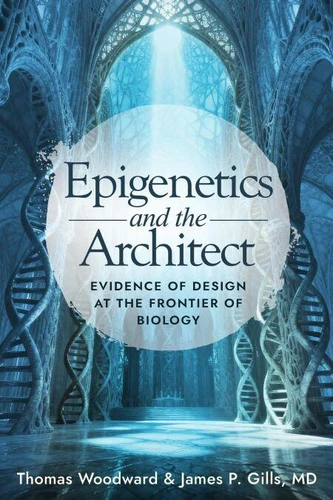
Epigenetics and the Architect
Par : ,Formats :
Disponible dans votre compte client Decitre ou Furet du Nord dès validation de votre commande. Le format ePub est :
- Compatible avec une lecture sur My Vivlio (smartphone, tablette, ordinateur)
- Compatible avec une lecture sur liseuses Vivlio
- Pour les liseuses autres que Vivlio, vous devez utiliser le logiciel Adobe Digital Edition. Non compatible avec la lecture sur les liseuses Kindle, Remarkable et Sony
 , qui est-ce ?
Notre partenaire de plateforme de lecture numérique où vous retrouverez l'ensemble de vos ebooks gratuitement
Pour en savoir plus sur nos ebooks, consultez notre aide en ligne ici
C'est si simple ! Lisez votre ebook avec l'app Vivlio sur votre tablette, mobile ou ordinateur :

- FormatePub
- ISBN978-1-63712-091-0
- EAN9781637120910
- Date de parution22/06/2026
- Protection num.pas de protection
- Infos supplémentairesepub
- ÉditeurDiscovery Institute Press
Résumé
In 1953 Watson and Crick ignited the genetics revolution with their discovery of the double helix. Today a second revolution is underway thanks to the discovery of DNA's mysterious partner in the elegant waltz of cellular life-the epigenome. The sophistication of that dance is astonishing researchers and upending the genetic paradigm. Epigenetics and the Architect explores the latest in this unfolding revolution but goes a step further than other recent introductions to the subject.
Evolutionary theory holds that all life diversified through a series of random mutations to DNA, but we now know that much of the information employed to build biological form is situated in epigenetic architecture beyond the reach of random genetic mutations and natural selection. As authors Thomas Woodward and James Gills show, this and the sheer intricacy of the genome/epigenome system are reinvigorating an ancient idea-that living things look designed because they are.
Evolutionary theory holds that all life diversified through a series of random mutations to DNA, but we now know that much of the information employed to build biological form is situated in epigenetic architecture beyond the reach of random genetic mutations and natural selection. As authors Thomas Woodward and James Gills show, this and the sheer intricacy of the genome/epigenome system are reinvigorating an ancient idea-that living things look designed because they are.