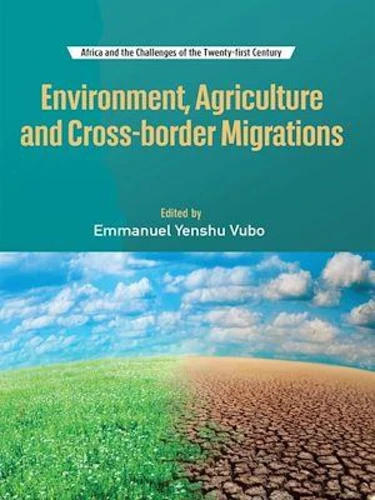
Environment, agriculture and cross-border migrations
Par :Formats :
Disponible dans votre compte client Decitre ou Furet du Nord dès validation de votre commande. Le format ePub est :
- Compatible avec une lecture sur My Vivlio (smartphone, tablette, ordinateur)
- Compatible avec une lecture sur liseuses Vivlio
- Pour les liseuses autres que Vivlio, vous devez utiliser le logiciel Adobe Digital Edition. Non compatible avec la lecture sur les liseuses Kindle, Remarkable et Sony
 , qui est-ce ?
Notre partenaire de plateforme de lecture numérique où vous retrouverez l'ensemble de vos ebooks gratuitement
Pour en savoir plus sur nos ebooks, consultez notre aide en ligne ici
C'est si simple ! Lisez votre ebook avec l'app Vivlio sur votre tablette, mobile ou ordinateur :

- Nombre de pages473
- FormatePub
- ISBN978-2-38234-030-1
- EAN9782382340301
- Date de parution06/10/2021
- Protection num.Digital Watermarking
- Taille901 Ko
- Infos supplémentairesepub
- ÉditeurCoédition NENA/CODESRIA
Résumé
This book brings together contributions on the challenges of the environment, agriculture and cross-border migrations in Africa; key areas that have become critical for the continent's development. The central theme running through these contributions is that Africa's development challenges can be attributed to its human and natural ecology. Contrasted with the Cold War epoch, current developments have ushered us into a world of long and uncertain transitions characterized by a search for new pathways including investment in large-scale agriculture by big finance, attempts to revitalize existing agriculture and reworking of social policy.
A major twist relates to environmental questions, especially climate change and its global effects, leading to all forms of cross-border migrations and the emergence of new areas of strategic interest such as sub-regional developments as in the Gulf of Guinea. This book provides some intellectual clues on how to interpret these emerging predicaments and chart a way forward into a new era for Africa.
A major twist relates to environmental questions, especially climate change and its global effects, leading to all forms of cross-border migrations and the emergence of new areas of strategic interest such as sub-regional developments as in the Gulf of Guinea. This book provides some intellectual clues on how to interpret these emerging predicaments and chart a way forward into a new era for Africa.