
Dr. Dominik Rodak hat Komposition und Musiktheorie sowie Rechtswissenschaften in Wien studiert, war Universitätsassistent am Institut für Römisches Recht und Antike Rechtsgeschichte der Universität Wien und hat im Römischen Recht promoviert. Rodak lehrt als Senior Lecturer an der Universität für Musik und darstellende Kunst Wien (mdw) historische Grundlagen der Komposition und ist an der mdw Jurist im Bereich des geltenden Universitäts- und Studienrechts.
Entwicklungslinien des militärischen Sonderguts (peculium castrense) von Augustus bis Hadrian
Par :Formats :
Disponible dans votre compte client Decitre ou Furet du Nord dès validation de votre commande. Le format PDF est :
- Compatible avec une lecture sur My Vivlio (smartphone, tablette, ordinateur)
- Compatible avec une lecture sur liseuses Vivlio
- Pour les liseuses autres que Vivlio, vous devez utiliser le logiciel Adobe Digital Edition. Non compatible avec la lecture sur les liseuses Kindle, Remarkable et Sony
 , qui est-ce ?
Notre partenaire de plateforme de lecture numérique où vous retrouverez l'ensemble de vos ebooks gratuitement
Pour en savoir plus sur nos ebooks, consultez notre aide en ligne ici
C'est si simple ! Lisez votre ebook avec l'app Vivlio sur votre tablette, mobile ou ordinateur :

- Nombre de pages167
- FormatPDF
- ISBN978-3-8470-1385-3
- EAN9783847013853
- Date de parution14/02/2022
- Protection num.pas de protection
- Taille5 Mo
- Infos supplémentairespdf
- ÉditeurV&R Unipress
Résumé
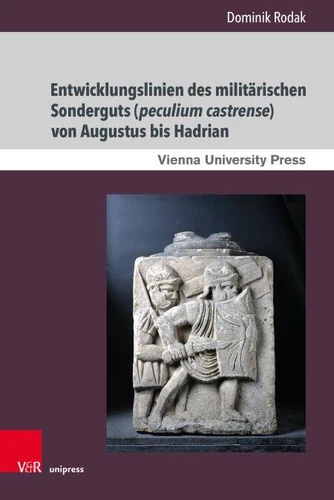
Augustus sprach den als Soldaten dienenden Haussöhnen ein Testierrecht über jene Vermögenswerte zu, welche sie im Militär erworben haben (militärisches Sondergut - peculium castrense). Dies erwies sich als erster Schritt weg von der rigiden Haus- und Vermögensgewalt römischer Väter in Richtung einer vermögensrechtlichen Verselbstständigung der Hauskinder. Das vorliegende Werk widmet sich den »dark ages« der Rechtsfigur des peculium castrense und zeigt auf, wie militärpolitische Entwicklungen auf römisches Privatrecht trafen.
The ius testandi over a peculium castrense granted to filii familias milites opened the way towards an increasing independence of children-in-power with regard to property rights.
This book especially focusses on the foundations of the institution and investigates its "dark ages". It covers the legal history of the peculium castrense in a strictly chronological manner and follows the evolution of this special peculium during the periods from Augustus to Hadrian. The effect of granting the filius familias miles the ability to testate as well as the changes resulting from his integration into the structure and organisation of the army are investigated in relation to the patria potestas.
A further topic discussed in depth are what may have been the motifs of a legal policy that established an ius testandi of filii familias milites and (since Hadrian) also of veterans still under the power of their fathers.
This book especially focusses on the foundations of the institution and investigates its "dark ages". It covers the legal history of the peculium castrense in a strictly chronological manner and follows the evolution of this special peculium during the periods from Augustus to Hadrian. The effect of granting the filius familias miles the ability to testate as well as the changes resulting from his integration into the structure and organisation of the army are investigated in relation to the patria potestas.
A further topic discussed in depth are what may have been the motifs of a legal policy that established an ius testandi of filii familias milites and (since Hadrian) also of veterans still under the power of their fathers.