
Dr. Patrice Djoufack ist derzeit Lehrbeauftragter an der Leibniz Universität Hannover.
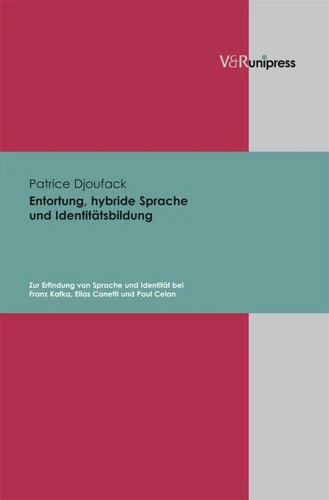
Entortung, hybride Sprache und Identitätsbildung. Zur Erfindung von Sprache und Identität bei Franz Kafka, Elias Canetti und Paul Celan
Par :Formats :
Disponible dans votre compte client Decitre ou Furet du Nord dès validation de votre commande. Le format PDF est :
- Compatible avec une lecture sur My Vivlio (smartphone, tablette, ordinateur)
- Compatible avec une lecture sur liseuses Vivlio
- Pour les liseuses autres que Vivlio, vous devez utiliser le logiciel Adobe Digital Edition. Non compatible avec la lecture sur les liseuses Kindle, Remarkable et Sony
 , qui est-ce ?
Notre partenaire de plateforme de lecture numérique où vous retrouverez l'ensemble de vos ebooks gratuitement
Pour en savoir plus sur nos ebooks, consultez notre aide en ligne ici
C'est si simple ! Lisez votre ebook avec l'app Vivlio sur votre tablette, mobile ou ordinateur :

- Nombre de pages443
- FormatPDF
- ISBN978-3-86234-091-0
- EAN9783862340910
- Date de parution18/02/2010
- Protection num.pas de protection
- Taille2 Mo
- Infos supplémentairespdf
- ÉditeurV&R Unipress
Résumé
The volume deals with the constitution of language and identity in literary texts written in the diaspora. The cultural approach enables an understanding of the intercultural experiences described here as well as an exploration of the processes and strategies necessary for generating and transforming language, culture and identity. To provide his analysis of the selected literary works with a terminological and methodological framework, the author first discusses theories of the postcolonial and discourse-theoretical concepts of identity and language.
The text analyses show that, by turning to fiction, the authors discussed here were able to exploit a power-free area. The latter is helpful when thinking about language and identity, as one can devise scenarios of intercultural encounter and diasporic experience, thereby putting the possibilities of self-discovery to the test. In their conceptualization of the subject, the authors "articulate" (Hall) memories, wishes and, above all, first-hand experiences with discursive power.
The innovative element here is that the experience of the diaspora and interculturality in general offers the possibility to scrutinize and enlarge on this understanding of discursively constituted identities.
The text analyses show that, by turning to fiction, the authors discussed here were able to exploit a power-free area. The latter is helpful when thinking about language and identity, as one can devise scenarios of intercultural encounter and diasporic experience, thereby putting the possibilities of self-discovery to the test. In their conceptualization of the subject, the authors "articulate" (Hall) memories, wishes and, above all, first-hand experiences with discursive power.
The innovative element here is that the experience of the diaspora and interculturality in general offers the possibility to scrutinize and enlarge on this understanding of discursively constituted identities.