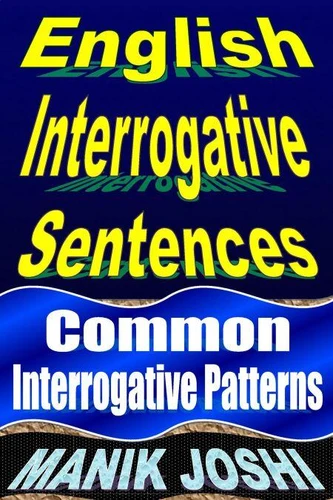
English Interrogative Sentences: Common Interrogative Patterns. English Daily Use, #2
Par :Formats :
Disponible dans votre compte client Decitre ou Furet du Nord dès validation de votre commande. Le format ePub est :
- Compatible avec une lecture sur My Vivlio (smartphone, tablette, ordinateur)
- Compatible avec une lecture sur liseuses Vivlio
- Pour les liseuses autres que Vivlio, vous devez utiliser le logiciel Adobe Digital Edition. Non compatible avec la lecture sur les liseuses Kindle, Remarkable et Sony
 , qui est-ce ?
Notre partenaire de plateforme de lecture numérique où vous retrouverez l'ensemble de vos ebooks gratuitement
Pour en savoir plus sur nos ebooks, consultez notre aide en ligne ici
C'est si simple ! Lisez votre ebook avec l'app Vivlio sur votre tablette, mobile ou ordinateur :

- FormatePub
- ISBN978-1-301-93904-6
- EAN9781301939046
- Date de parution08/02/2013
- Protection num.pas de protection
- Infos supplémentairesepub
- ÉditeurBluewater
Résumé
This Book Covers The Following Topics:What are "Interrogative Sentences"?Structure (1) -- Wh-Question Word + Be/Do/Have/Modal(1A). What + Be/Do/Have/Modal(1B). When + Be/Do/Have/Modal(1C). Where + Be/Do/Have/Modal(1D). Which + Be/Do/Have/Modal(1E). Who + Be/Do/Have/Modal(1F). Whom + Be/Do/Have/Modal(1G). Whose + Be/Do/Have/Modal(1H). Why + Be/Do/Have/Modal(1I). How + Be/Do/Have/ModalStructure (2) -- Wh-Question Word + Word/Words + Be/Do/Have/Modal(2A).
What + Word/Words + Be/Do/Have/Modal(2B). When + Word/Words + Be/Do/Have/Modal(2C). Where + Word/Words + Be/Do/Have/Modal(2D). Which + Word/Words + Be/Do/Have/Modal(2E). Who + Word/Words + Be/Do/Have/Modal(2F). Whom + Word/Words + Be/Do/Have/Modal(2G). Whose + Word/Words + Be/Do/Have/Modal(2H). Why + Word/Words + Be/Do/Have/Modal(2I). How + Word/Words + Be/Do/Have/ModalStructure (3) -- Wh-Question Word + Main Verb (Present or Past)Structure (4) - Interrogatives Sentences - Be/Do/Have/Modal(4A).
Interrogatives Starting From - Am, Is, Are, Was, Were(4B). Interrogatives Starting From - Do, Does, Did(4C). Interrogatives Starting From - Have, Has, Had(4D). Interrogatives Starting From - Modal VerbsStructure (5) -- Question TagsStructure (6) -- What ifStructure (7) - How Long/How Much/How ManyStructure (8) -- Wh-Question Word + To + Verb WordStructure (9) - "What About" and "How About"Structure (10) - Alternative QuestionsStructure (11) - Indirect QuestionsFormation of Interrogatives from AffirmativesExercisesSample This:What are "Interrogative Sentences"?Interrogative sentences are used to ask questions.
An interrogative sentence ends with a question mark. The most common interrogative words are as follows:What, When, Where, Which, Who, Whom, Whose, Why, HowInterrogative words and what they refer:What - refers to 'specific information' or confirmation/repetitionWhen - refers to 'at what time' or 'on what occasion'Where - refers to 'in what place, position or situation'Which - refers to 'choice or alternative'Who - refers to 'identity' of a subject (person/people)Whom - refers to 'identity' of an object (person/people)Whose - refers to 'who something belongs to'Why - refers to 'reason, explanation or purpose'How - refers to 'way or manner', 'condition or quality'These words are called 'Wh-question words' because all these words contain the letter 'w' and 'h'.
All these words (except 'how') even start from 'Wh'. NOTE: The following words are also used to ask questions:Whatever, Whenever, Wherever, WhoeverThese forms show 'surprise, confusion, or emphasis. Besides 'Wh-question words', Auxiliary Verbs 'Be', 'Do', 'Have', and 'Modal Verbs' are also used to form interrogative sentences. Following is the list of auxiliary and modal verbs:Auxiliary Verb-- Be-- Am, Is, Are, Was, WereAuxiliary Verb-- Do-- Do, Does, DidAuxiliary Verb-- Have-- Have, Has, HadModal Verbs-- May, Might, Can, Could, Will, Would, Shall, Should, Must, Need, Used (To), Ought (To), DareYou can begin sentences with these verbs to form Yes/No interrogative sentences.(1A).
What + Be/Do/Have/ModalWhat is a good pet to give a five-year-old child?What is a long way away?What is a reasonable grocery budget?What is age got to do with it?What is all that?What is Australia's national food?What is behind the nation's food shortages?What is better for your company: happy staff or short-term profits?
What + Word/Words + Be/Do/Have/Modal(2B). When + Word/Words + Be/Do/Have/Modal(2C). Where + Word/Words + Be/Do/Have/Modal(2D). Which + Word/Words + Be/Do/Have/Modal(2E). Who + Word/Words + Be/Do/Have/Modal(2F). Whom + Word/Words + Be/Do/Have/Modal(2G). Whose + Word/Words + Be/Do/Have/Modal(2H). Why + Word/Words + Be/Do/Have/Modal(2I). How + Word/Words + Be/Do/Have/ModalStructure (3) -- Wh-Question Word + Main Verb (Present or Past)Structure (4) - Interrogatives Sentences - Be/Do/Have/Modal(4A).
Interrogatives Starting From - Am, Is, Are, Was, Were(4B). Interrogatives Starting From - Do, Does, Did(4C). Interrogatives Starting From - Have, Has, Had(4D). Interrogatives Starting From - Modal VerbsStructure (5) -- Question TagsStructure (6) -- What ifStructure (7) - How Long/How Much/How ManyStructure (8) -- Wh-Question Word + To + Verb WordStructure (9) - "What About" and "How About"Structure (10) - Alternative QuestionsStructure (11) - Indirect QuestionsFormation of Interrogatives from AffirmativesExercisesSample This:What are "Interrogative Sentences"?Interrogative sentences are used to ask questions.
An interrogative sentence ends with a question mark. The most common interrogative words are as follows:What, When, Where, Which, Who, Whom, Whose, Why, HowInterrogative words and what they refer:What - refers to 'specific information' or confirmation/repetitionWhen - refers to 'at what time' or 'on what occasion'Where - refers to 'in what place, position or situation'Which - refers to 'choice or alternative'Who - refers to 'identity' of a subject (person/people)Whom - refers to 'identity' of an object (person/people)Whose - refers to 'who something belongs to'Why - refers to 'reason, explanation or purpose'How - refers to 'way or manner', 'condition or quality'These words are called 'Wh-question words' because all these words contain the letter 'w' and 'h'.
All these words (except 'how') even start from 'Wh'. NOTE: The following words are also used to ask questions:Whatever, Whenever, Wherever, WhoeverThese forms show 'surprise, confusion, or emphasis. Besides 'Wh-question words', Auxiliary Verbs 'Be', 'Do', 'Have', and 'Modal Verbs' are also used to form interrogative sentences. Following is the list of auxiliary and modal verbs:Auxiliary Verb-- Be-- Am, Is, Are, Was, WereAuxiliary Verb-- Do-- Do, Does, DidAuxiliary Verb-- Have-- Have, Has, HadModal Verbs-- May, Might, Can, Could, Will, Would, Shall, Should, Must, Need, Used (To), Ought (To), DareYou can begin sentences with these verbs to form Yes/No interrogative sentences.(1A).
What + Be/Do/Have/ModalWhat is a good pet to give a five-year-old child?What is a long way away?What is a reasonable grocery budget?What is age got to do with it?What is all that?What is Australia's national food?What is behind the nation's food shortages?What is better for your company: happy staff or short-term profits?