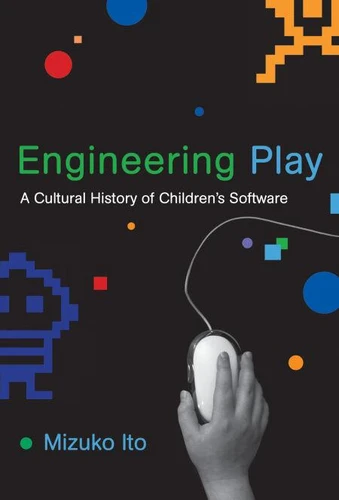
Engineering Play. A Cultural History of Children's Software
Par :Formats :
Disponible dans votre compte client Decitre ou Furet du Nord dès validation de votre commande. Le format ePub protégé est :
- Compatible avec une lecture sur My Vivlio (smartphone, tablette, ordinateur)
- Compatible avec une lecture sur liseuses Vivlio
- Pour les liseuses autres que Vivlio, vous devez utiliser le logiciel Adobe Digital Edition. Non compatible avec la lecture sur les liseuses Kindle, Remarkable et Sony
- Non compatible avec un achat hors France métropolitaine
 , qui est-ce ?
Notre partenaire de plateforme de lecture numérique où vous retrouverez l'ensemble de vos ebooks gratuitement
Pour en savoir plus sur nos ebooks, consultez notre aide en ligne ici
C'est si simple ! Lisez votre ebook avec l'app Vivlio sur votre tablette, mobile ou ordinateur :

- Nombre de pages248
- FormatePub
- ISBN978-0-262-29155-2
- EAN9780262291552
- Date de parution10/02/2012
- Protection num.Adobe DRM
- Taille3 Mo
- Infos supplémentairesepub
- ÉditeurThe MIT Press
Résumé
How the influential industry that produced such popular games as Oregon Trail and KidPix emerged from experimental efforts to use computers as tools in child-centered learning. Today, computers are part of kids' everyday lives, used both for play and for learning. We envy children's natural affinity for computers, the ease with which they click in and out of digital worlds. Thirty years ago, however, the computer belonged almost exclusively to business, the military, and academia.
In Engineering Play, Mizuko Ito describes the transformation of the computer from a tool associated with adults and work to one linked to children, learning, and play. Ito gives an account of a pivotal period in the 1980s and 1990s, which saw the rise of a new category of consumer software designed specifically for elementary school-aged children. "Edutainment" software sought to blend various educational philosophies with interactive gaming and entertainment, and included such titles as Number Munchers, Oregon Trail, KidPix, and Where in the World Is Carmen Sandiego?.
The children's software boom (and the bust that followed), says Ito, can be seen as a microcosm of the negotiations surrounding new technology, children, and education. The story she tells is both a testimonial to the transformative power of innovation and a cautionary tale about its limitations.
In Engineering Play, Mizuko Ito describes the transformation of the computer from a tool associated with adults and work to one linked to children, learning, and play. Ito gives an account of a pivotal period in the 1980s and 1990s, which saw the rise of a new category of consumer software designed specifically for elementary school-aged children. "Edutainment" software sought to blend various educational philosophies with interactive gaming and entertainment, and included such titles as Number Munchers, Oregon Trail, KidPix, and Where in the World Is Carmen Sandiego?.
The children's software boom (and the bust that followed), says Ito, can be seen as a microcosm of the negotiations surrounding new technology, children, and education. The story she tells is both a testimonial to the transformative power of innovation and a cautionary tale about its limitations.
A propos de Mizuko Ito


44,14 €

29,42 €