
Chris Mowat is a Research Fellow in Ancient History at the University of Sheffield, and a Visiting Fellow at Newcastle University. They were awarded their PhD at Newcastle University in 2018. Their research focuses on gender, sex and sexuality in Roman religion and society.
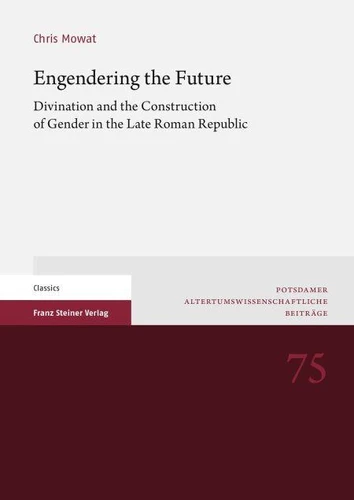
Engendering the Future. Divination and the Construction of Gender in the Late Roman Republic
Par :Formats :
Disponible dans votre compte client Decitre ou Furet du Nord dès validation de votre commande. Le format PDF est :
- Compatible avec une lecture sur My Vivlio (smartphone, tablette, ordinateur)
- Compatible avec une lecture sur liseuses Vivlio
- Pour les liseuses autres que Vivlio, vous devez utiliser le logiciel Adobe Digital Edition. Non compatible avec la lecture sur les liseuses Kindle, Remarkable et Sony
 , qui est-ce ?
Notre partenaire de plateforme de lecture numérique où vous retrouverez l'ensemble de vos ebooks gratuitement
Pour en savoir plus sur nos ebooks, consultez notre aide en ligne ici
C'est si simple ! Lisez votre ebook avec l'app Vivlio sur votre tablette, mobile ou ordinateur :

- Nombre de pages201
- FormatPDF
- ISBN978-3-515-12936-7
- EAN9783515129367
- Date de parution04/03/2021
- Protection num.Digital Watermarking
- Taille2 Mo
- Infos supplémentairespdf
- ÉditeurFranz Steiner
Résumé
Chris Mowat brings together understandings of divinatory traditions and of gender in the Late Roman Republic to consider how each influenced the performative nature of the other. The identity of the divinatory actor(s) is an important element that plays a part in confirming the correctness of interpretations, and as such gender is an important aspect in understanding divination within Roman religious traditions.
Beginning with Cicero's "On Divination", Mowat's reading shows how gender is axiomatic to - but never explicit in - the opposing viewpoints presented.
Four extended case studies follow, each focusing on a specific divinatory tradition: the Sibylline Books, as written prophetic guides for the State; the portentous nature of the birth of an intersex child under the Republic, and the ritual response it garnered; the sacrificial specialism of individual diviners, specifically through the story of a woman named Martha; and, finally, the construction of prophetic dreaming in the Roman Republic.
Together, these studies demonstrate how the performativity of gender informed, but was also informed by, the performativity of divination in the Roman world, in a reciprocal and inseparable relationship.
Four extended case studies follow, each focusing on a specific divinatory tradition: the Sibylline Books, as written prophetic guides for the State; the portentous nature of the birth of an intersex child under the Republic, and the ritual response it garnered; the sacrificial specialism of individual diviners, specifically through the story of a woman named Martha; and, finally, the construction of prophetic dreaming in the Roman Republic.
Together, these studies demonstrate how the performativity of gender informed, but was also informed by, the performativity of divination in the Roman world, in a reciprocal and inseparable relationship.