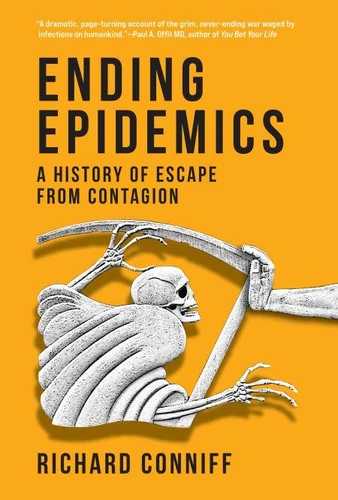
Ending Epidemics. A History of Escape from Contagion
Par :Formats :
Disponible dans votre compte client Decitre ou Furet du Nord dès validation de votre commande. Le format ePub protégé est :
- Compatible avec une lecture sur My Vivlio (smartphone, tablette, ordinateur)
- Compatible avec une lecture sur liseuses Vivlio
- Pour les liseuses autres que Vivlio, vous devez utiliser le logiciel Adobe Digital Edition. Non compatible avec la lecture sur les liseuses Kindle, Remarkable et Sony
- Non compatible avec un achat hors France métropolitaine
 , qui est-ce ?
Notre partenaire de plateforme de lecture numérique où vous retrouverez l'ensemble de vos ebooks gratuitement
Pour en savoir plus sur nos ebooks, consultez notre aide en ligne ici
C'est si simple ! Lisez votre ebook avec l'app Vivlio sur votre tablette, mobile ou ordinateur :

- Nombre de pages376
- FormatePub
- ISBN978-0-262-37385-2
- EAN9780262373852
- Date de parution11/04/2023
- Protection num.Adobe DRM
- Taille42 Mo
- Infos supplémentairesepub
- ÉditeurThe MIT Press
Résumé
How scientists saved humanity from the deadliest infectious diseases-and what we can do to prepare ourselves for future epidemics. After the unprecedented events of the COVID-19 pandemic, it may be hard to imagine a time not so long ago when deadly diseases were a routine part of life. It is harder still to fathom that the best medical thinking at that time blamed these diseases on noxious miasmas, bodily humors, and divine dyspepsia.
This all began to change on a day in April 1676, when a little-known Dutch merchant described bacteria for the first time. Beginning on that day in Delft and ending on the day in 1978 when the smallpox virus claimed its last known victim, Ending Epidemics explains how we came to understand and prevent many of our worst infectious diseases-and double average life expectancy. Ending Epidemics tells the story behind "the mortality revolution, " the dramatic transformation not just in our longevity, but in the character of childhood, family life, and human society.
Richard Conniff recounts the moments of inspiration and innovation, decades of dogged persistence, and, of course, periods of terrible suffering that stir individuals, institutions, and governments to act in the name of public health. Stars of medical science feature in this drama, but lesser-known figures also play a critical role. And while the history of germ theory is central to this story, Ending Epidemics also describes the importance of everything from sanitation improvements and the discovery of antibiotics to the development of the microscope and the syringe-technologies we now take for granted.
This all began to change on a day in April 1676, when a little-known Dutch merchant described bacteria for the first time. Beginning on that day in Delft and ending on the day in 1978 when the smallpox virus claimed its last known victim, Ending Epidemics explains how we came to understand and prevent many of our worst infectious diseases-and double average life expectancy. Ending Epidemics tells the story behind "the mortality revolution, " the dramatic transformation not just in our longevity, but in the character of childhood, family life, and human society.
Richard Conniff recounts the moments of inspiration and innovation, decades of dogged persistence, and, of course, periods of terrible suffering that stir individuals, institutions, and governments to act in the name of public health. Stars of medical science feature in this drama, but lesser-known figures also play a critical role. And while the history of germ theory is central to this story, Ending Epidemics also describes the importance of everything from sanitation improvements and the discovery of antibiotics to the development of the microscope and the syringe-technologies we now take for granted.