Author
Nouveauté
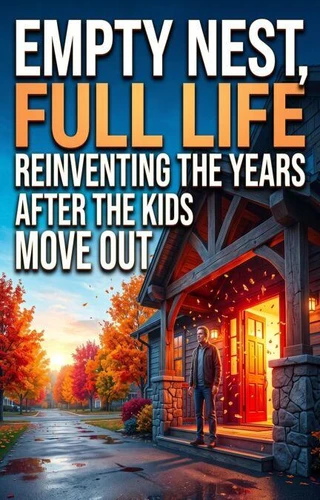
Empty Nest, Full Life. Reinventing the Years After the Kids Move Out
Par :Formats :
Disponible dans votre compte client Decitre ou Furet du Nord dès validation de votre commande. Le format ePub est :
- Compatible avec une lecture sur My Vivlio (smartphone, tablette, ordinateur)
- Compatible avec une lecture sur liseuses Vivlio
- Pour les liseuses autres que Vivlio, vous devez utiliser le logiciel Adobe Digital Edition. Non compatible avec la lecture sur les liseuses Kindle, Remarkable et Sony
 , qui est-ce ?
Notre partenaire de plateforme de lecture numérique où vous retrouverez l'ensemble de vos ebooks gratuitement
Pour en savoir plus sur nos ebooks, consultez notre aide en ligne ici
C'est si simple ! Lisez votre ebook avec l'app Vivlio sur votre tablette, mobile ou ordinateur :

- Nombre de pages199
- FormatePub
- ISBN978-3-565-59599-0
- EAN9783565595990
- Date de parution28/07/2026
- Protection num.pas de protection
- Taille795 Ko
- Infos supplémentairesepub
- ÉditeurEmphaloz Publishing House
Résumé
The silence of an empty house is often portrayed as the sound of obsolescence, a dreaded end to a parent's purpose. But what if this cultural narrative is a statistical illusion? This journalistic investigation dismantles the pervasive myth of the "Empty Nest Syndrome, " tracing its origins to a 1914 congressional resolution that inadvertently created the "Martyr-Mother Myth."
Author James Hartley draws on decades of research, from Dolores Borland's revolutionary 1982 study to Laura Carstensen's Socioemotional Selectivity Theory, to reveal a startling truth: for three-quarters of parents, the empty nest is not a crisis but a liberation.
This period marks a measurable increase in life satisfaction, marital happiness, and personal freedom-a "Freedom Dividend" that society has taught parents to feel guilty about. This book provides a new, evidence-based roadmap for the "Third Chapter, " redefining this transition not as an ending, but as the beginning of life's most autonomous and joyful phase. It uncovers the psychological and sociological data that empowers parents to shed the guilt, reinvent their identity, and embrace the profound freedom that comes after the kids move out.
This period marks a measurable increase in life satisfaction, marital happiness, and personal freedom-a "Freedom Dividend" that society has taught parents to feel guilty about. This book provides a new, evidence-based roadmap for the "Third Chapter, " redefining this transition not as an ending, but as the beginning of life's most autonomous and joyful phase. It uncovers the psychological and sociological data that empowers parents to shed the guilt, reinvent their identity, and embrace the profound freedom that comes after the kids move out.