SOLDES
Jusqu'à -70% sur une sélection d'articles*

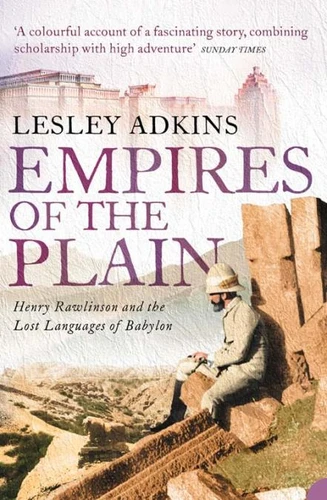
Empires of the Plain. Henry Rawlinson and the Lost Languages of Babylon (Text Only)
Par :Formats :
Disponible dans votre compte client Decitre ou Furet du Nord dès validation de votre commande. Le format ePub protégé est :
- Compatible avec une lecture sur My Vivlio (smartphone, tablette, ordinateur)
- Compatible avec une lecture sur liseuses Vivlio
- Pour les liseuses autres que Vivlio, vous devez utiliser le logiciel Adobe Digital Edition. Non compatible avec la lecture sur les liseuses Kindle, Remarkable et Sony
- Non compatible avec un achat hors France métropolitaine
 , qui est-ce ?
Notre partenaire de plateforme de lecture numérique où vous retrouverez l'ensemble de vos ebooks gratuitement
Pour en savoir plus sur nos ebooks, consultez notre aide en ligne ici
C'est si simple ! Lisez votre ebook avec l'app Vivlio sur votre tablette, mobile ou ordinateur :

- Nombre de pages464
- FormatePub
- ISBN978-0-00-745237-8
- EAN9780007452378
- Date de parution28/06/2012
- Protection num.Adobe DRM
- Infos supplémentairesepub
- ÉditeurHarper Perennial
Résumé
How 19th-century soldier, adventurer and scholar Henry Rawlinson deciphered cuneiform, the world's earliest writing, and rediscovered Iraq's ancient civilisations.
This is the exciting, true adventure story of Henry Rawlinson, a fearless soldier, sportsman and explorer. From 1827 he spent twenty-five years in India, Iran, Iraq and Afghanistan. A brilliant linguist, fascinated by history, he became obsessed with cuneiform, the world's earliest writing.
An immense inscription on a sheer rock face at Bisitun in Iran was the key to understanding the many cuneiform scripts and languages, and only Rawlinson had the skills to achieve the perilous ascent and copy the monument. In her gripping account, Lesley Adkins relates how Rawlinson triumphed in deciphering the lost languages of Persia and Babylonia, overcoming his bitter rival, Edward Hincks. While Rawlinson was based at Baghdad, incredible palaces with whole libraries of cuneiform clay tablets were unearthed in the ancient mounds of Mesopotamia, from Nineveh to Babylon - the great flood plain of the Tigris and the Euphrates rivers that had been fought over by so many powerful empires.
His decipherment of the inscriptions resurrected these lost civilisations, revealing fascinating details of everyday life and forgotten historical events. By proving to the astonished Victorian public that people and places in the Old Testament really existed, Rawlinson assured his own place in history.
An immense inscription on a sheer rock face at Bisitun in Iran was the key to understanding the many cuneiform scripts and languages, and only Rawlinson had the skills to achieve the perilous ascent and copy the monument. In her gripping account, Lesley Adkins relates how Rawlinson triumphed in deciphering the lost languages of Persia and Babylonia, overcoming his bitter rival, Edward Hincks. While Rawlinson was based at Baghdad, incredible palaces with whole libraries of cuneiform clay tablets were unearthed in the ancient mounds of Mesopotamia, from Nineveh to Babylon - the great flood plain of the Tigris and the Euphrates rivers that had been fought over by so many powerful empires.
His decipherment of the inscriptions resurrected these lost civilisations, revealing fascinating details of everyday life and forgotten historical events. By proving to the astonished Victorian public that people and places in the Old Testament really existed, Rawlinson assured his own place in history.
A propos de Lesley Adkins

3,99 €
3,99 €
4,49 €