
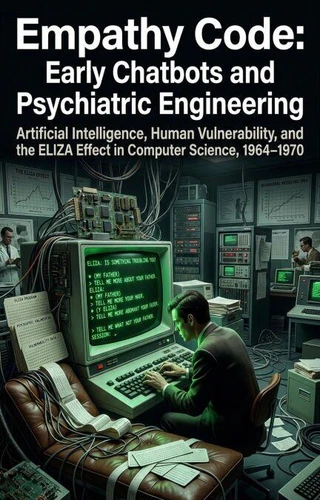
Empathy Code: Early Chatbots and Psychiatric Engineering. Artificial Intelligence, Human Vulnerability, and the ELIZA Effect in Computer Science, 1964–1970
Par :Formats :
Disponible dans votre compte client Decitre ou Furet du Nord dès validation de votre commande. Le format ePub est :
- Compatible avec une lecture sur My Vivlio (smartphone, tablette, ordinateur)
- Compatible avec une lecture sur liseuses Vivlio
- Pour les liseuses autres que Vivlio, vous devez utiliser le logiciel Adobe Digital Edition. Non compatible avec la lecture sur les liseuses Kindle, Remarkable et Sony
 , qui est-ce ?
Notre partenaire de plateforme de lecture numérique où vous retrouverez l'ensemble de vos ebooks gratuitement
Pour en savoir plus sur nos ebooks, consultez notre aide en ligne ici
C'est si simple ! Lisez votre ebook avec l'app Vivlio sur votre tablette, mobile ou ordinateur :

- Nombre de pages148
- FormatePub
- ISBN978-3-565-35023-0
- EAN9783565350230
- Date de parution23/03/2026
- Protection num.pas de protection
- Taille778 Ko
- Infos supplémentairesepub
- ÉditeurEmphaloz Publishing House
Résumé
In the early days of computing, machines were massive, cold calculators built exclusively for processing numerical data. No one anticipated that typing text into a rudimentary terminal could provoke genuine emotional breakthroughs, or that people would willingly confess their deepest secrets to a machine.
The profound mystery emerged when researchers introduced ELIZA, a simple program designed to parody a psychotherapist.
To their shock, users instantly formed intense emotional bonds with the code, fiercely defending the machine's perceived empathy. This exposed a terrifying vulnerability in human psychology: our desperate, hardwired need to be heard, even if the listener is just an empty script echoing our words back to us. This captivating historical overview uncovers the origins of conversational user interfaces and the accidental discovery of the ELIZA effect.
It details how mid-century computer scientists inadvertently became psychiatric engineers, wrestling with the ethical implications of machines that could simulate human care without possessing a shred of consciousness. Explore the fascinating dawn of artificial intelligence and uncover the roots of our modern digital dependency. Read this compelling narrative to understand why we trust algorithms with our emotions and what that reveals about the human condition.
To their shock, users instantly formed intense emotional bonds with the code, fiercely defending the machine's perceived empathy. This exposed a terrifying vulnerability in human psychology: our desperate, hardwired need to be heard, even if the listener is just an empty script echoing our words back to us. This captivating historical overview uncovers the origins of conversational user interfaces and the accidental discovery of the ELIZA effect.
It details how mid-century computer scientists inadvertently became psychiatric engineers, wrestling with the ethical implications of machines that could simulate human care without possessing a shred of consciousness. Explore the fascinating dawn of artificial intelligence and uncover the roots of our modern digital dependency. Read this compelling narrative to understand why we trust algorithms with our emotions and what that reveals about the human condition.