
Ekaterina Nechaeva completed her PhD at the University of Siena in 2007 after graduating from the Saint-Petersburg State University. She is currently a Research Fellow in Byzantine Studies at Dumbarton Oaks/Harvard University. After a long career at the State Hermitage museum, she now lives in Rome where she is associated with the American Academy in Rome. Her current project is on 'defection and freedom' in the Late Antique world, with a focus on individuals who fled, deserted, or permanently left the Roman Empire.
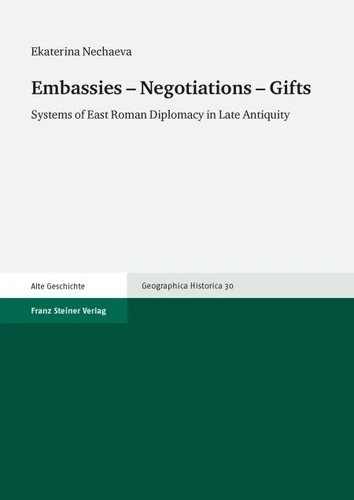
Embassies – Negotiations – Gifts. Systems of East Roman Diplomacy in Late Antiquity
Par :Formats :
Disponible dans votre compte client Decitre ou Furet du Nord dès validation de votre commande. Le format PDF est :
- Compatible avec une lecture sur My Vivlio (smartphone, tablette, ordinateur)
- Compatible avec une lecture sur liseuses Vivlio
- Pour les liseuses autres que Vivlio, vous devez utiliser le logiciel Adobe Digital Edition. Non compatible avec la lecture sur les liseuses Kindle, Remarkable et Sony
 , qui est-ce ?
Notre partenaire de plateforme de lecture numérique où vous retrouverez l'ensemble de vos ebooks gratuitement
Pour en savoir plus sur nos ebooks, consultez notre aide en ligne ici
C'est si simple ! Lisez votre ebook avec l'app Vivlio sur votre tablette, mobile ou ordinateur :

- Nombre de pages306
- FormatPDF
- ISBN978-3-515-10801-0
- EAN9783515108010
- Date de parution16/10/2014
- Protection num.Digital Watermarking
- Taille2 Mo
- Infos supplémentairespdf
- ÉditeurFranz Steiner
Résumé
This e-book offers an original approach to late Roman/early Byzantine diplomacy as a system. Assessing both official and clandestine perspectives, Ekaterina Nechaeva examines the working mechanisms of this diplomatic machine and reveals the 'block' organization of embassies as a basic feature of international communication. Negotiations were split into several phases and accompanied by elaborate protocol and rich ceremony.
Gift exchange and the distribution of insignia comprised a vital part of the diplomatic process. What were the semantics of these symbolic acts? The study accents the status significance of such donations. Ambassadors, who embodied high-level diplomacy, delivered gifts, led talks, and mediated international dialogue. Who were these envoys? How dangerous and adventurous were their missions? What were these expeditions like? How did they travel and how far? Nechaeva scrutinizes these and further questions by investigating the practices of ambassadorial business.
Throughout the e-book the analysis of secret negotiations, the intelligence system and spy activities of envoys, plots and political murders reveals the shadowy side of diplomacy.
Gift exchange and the distribution of insignia comprised a vital part of the diplomatic process. What were the semantics of these symbolic acts? The study accents the status significance of such donations. Ambassadors, who embodied high-level diplomacy, delivered gifts, led talks, and mediated international dialogue. Who were these envoys? How dangerous and adventurous were their missions? What were these expeditions like? How did they travel and how far? Nechaeva scrutinizes these and further questions by investigating the practices of ambassadorial business.
Throughout the e-book the analysis of secret negotiations, the intelligence system and spy activities of envoys, plots and political murders reveals the shadowy side of diplomacy.