Emancipation Proclamation
Par :Formats :
Disponible dans votre compte client Decitre ou Furet du Nord dès validation de votre commande. Le format ePub est :
- Compatible avec une lecture sur My Vivlio (smartphone, tablette, ordinateur)
- Compatible avec une lecture sur liseuses Vivlio
- Pour les liseuses autres que Vivlio, vous devez utiliser le logiciel Adobe Digital Edition. Non compatible avec la lecture sur les liseuses Kindle, Remarkable et Sony
 , qui est-ce ?
Notre partenaire de plateforme de lecture numérique où vous retrouverez l'ensemble de vos ebooks gratuitement
Pour en savoir plus sur nos ebooks, consultez notre aide en ligne ici
C'est si simple ! Lisez votre ebook avec l'app Vivlio sur votre tablette, mobile ou ordinateur :

- Nombre de pages4
- FormatePub
- ISBN978-3-96189-293-8
- EAN9783961892938
- Date de parution18/04/2017
- Protection num.pas de protection
- Taille170 Ko
- Infos supplémentairesepub
- ÉditeurChiemsee Verlag
Résumé
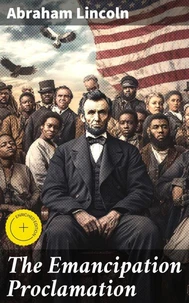
The Emancipation Proclamation was a presidential proclamation and executive order issued by President Abraham Lincoln on January 1, 1863. It purported to change the federal legal status of more than 3 million enslaved people in the designated areas of the South from "slave" to "free", although its immediate effect was less. It had the practical effect that as soon as a slave escaped the control of the Confederate government, by running away or through advances of federal troops, the slave became legally free.
Eventually it reached and liberated all of the designated slaves. It was issued as a war measure during the American Civil War, directed to all of the areas in rebellion and all segments of the executive branch (including the Army and Navy) of the United States. It proclaimed the freedom of slaves in ten states. Because it was issued under the President's authority to suppress rebellion (war powers), it necessarily excluded areas not in rebellion - it applied to more than 3 million of the 4 million slaves at the time.
The Proclamation was based on the president's constitutional authority as commander in chief of the armed forces; it was not a law passed by Congress. The Proclamation was issued in January 1863 after U. S government issued a series of warnings in the summer of 1862 under the Second Confiscation Act, allowing Southern Confederate supporters 60 days to surrender, or face confiscation of land and slaves.
The Proclamation also ordered that suitable persons among those freed could be enrolled into the paid service of United States' forces, and ordered the Union Army (and all segments of the Executive branch) to "recognize and maintain the freedom of" the ex-slaves. The Proclamation did not compensate the owners, did not outlaw slavery, and did not grant citizenship to the ex-slaves (called freedmen).
It made the eradication of slavery an explicit war goal, in addition to the goal of reuniting the Union.
Eventually it reached and liberated all of the designated slaves. It was issued as a war measure during the American Civil War, directed to all of the areas in rebellion and all segments of the executive branch (including the Army and Navy) of the United States. It proclaimed the freedom of slaves in ten states. Because it was issued under the President's authority to suppress rebellion (war powers), it necessarily excluded areas not in rebellion - it applied to more than 3 million of the 4 million slaves at the time.
The Proclamation was based on the president's constitutional authority as commander in chief of the armed forces; it was not a law passed by Congress. The Proclamation was issued in January 1863 after U. S government issued a series of warnings in the summer of 1862 under the Second Confiscation Act, allowing Southern Confederate supporters 60 days to surrender, or face confiscation of land and slaves.
The Proclamation also ordered that suitable persons among those freed could be enrolled into the paid service of United States' forces, and ordered the Union Army (and all segments of the Executive branch) to "recognize and maintain the freedom of" the ex-slaves. The Proclamation did not compensate the owners, did not outlaw slavery, and did not grant citizenship to the ex-slaves (called freedmen).
It made the eradication of slavery an explicit war goal, in addition to the goal of reuniting the Union.
A propos de Abraham Lincoln



0,49 €

0,99 €
0,99 €