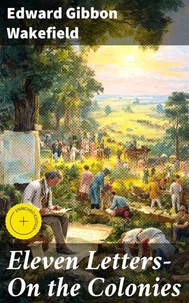
Eleven Letters- On the Colonies
Par :Formats :
Disponible dans votre compte client Decitre ou Furet du Nord dès validation de votre commande. Le format ePub est :
- Compatible avec une lecture sur My Vivlio (smartphone, tablette, ordinateur)
- Compatible avec une lecture sur liseuses Vivlio
- Pour les liseuses autres que Vivlio, vous devez utiliser le logiciel Adobe Digital Edition. Non compatible avec la lecture sur les liseuses Kindle, Remarkable et Sony
 , qui est-ce ?
Notre partenaire de plateforme de lecture numérique où vous retrouverez l'ensemble de vos ebooks gratuitement
Pour en savoir plus sur nos ebooks, consultez notre aide en ligne ici
C'est si simple ! Lisez votre ebook avec l'app Vivlio sur votre tablette, mobile ou ordinateur :

- Nombre de pages51
- FormatePub
- ISBN859-65--4732234-4
- EAN8596547322344
- Date de parution15/09/2022
- Protection num.Digital Watermarking
- Taille361 Ko
- Infos supplémentairesepub
- ÉditeurDIGICAT
Résumé
In "Eleven Letters: On the Colonies, " Edward Gibbon Wakefield presents a compelling discourse on colonialism, migration, and the socio-economic structures of the 19th-century British Empire. Written in a conversational yet incisive literary style, the book comprises a series of essays rendered as letters that articulate Wakefield's innovative theories on colonization, particularly addressing the principles of systematic colonization.
His arguments not only reflect the socio-political climate of his time but also delve into the ethics and practicalities of forming colonies that would sustain their populations and enhance the empire's wealth, establishing a framework that would later influence colonial policies. Edward Gibbon Wakefield, a prominent political theorist and a central figure in the development of colonial ideology, was influenced by his own experiences with the challenges of settlement and governance.
His direct involvement with colonization efforts in New Zealand and Canada, combined with his keen interest in societal models, enabled him to explore the intricacies of migration, land distribution, and labor in his writings. As a radical thinker of his time, Wakefield's perspectives can be traced back to his transformative views on social order and economic efficiency, which sought to reconcile moral concerns with practical outcomes.
"Eleven Letters: On the Colonies" is an essential read for anyone interested in the historical discourse of colonialism and its implications for modern governance. Wakefield's rigorous analysis and vision for a better colonial future resonate with contemporary discussions on migration and integration. For scholars, students, and passionate readers alike, this book offers invaluable insights into the foundations of colonial thought and the realities of early 19th-century British expansion.
His arguments not only reflect the socio-political climate of his time but also delve into the ethics and practicalities of forming colonies that would sustain their populations and enhance the empire's wealth, establishing a framework that would later influence colonial policies. Edward Gibbon Wakefield, a prominent political theorist and a central figure in the development of colonial ideology, was influenced by his own experiences with the challenges of settlement and governance.
His direct involvement with colonization efforts in New Zealand and Canada, combined with his keen interest in societal models, enabled him to explore the intricacies of migration, land distribution, and labor in his writings. As a radical thinker of his time, Wakefield's perspectives can be traced back to his transformative views on social order and economic efficiency, which sought to reconcile moral concerns with practical outcomes.
"Eleven Letters: On the Colonies" is an essential read for anyone interested in the historical discourse of colonialism and its implications for modern governance. Wakefield's rigorous analysis and vision for a better colonial future resonate with contemporary discussions on migration and integration. For scholars, students, and passionate readers alike, this book offers invaluable insights into the foundations of colonial thought and the realities of early 19th-century British expansion.