
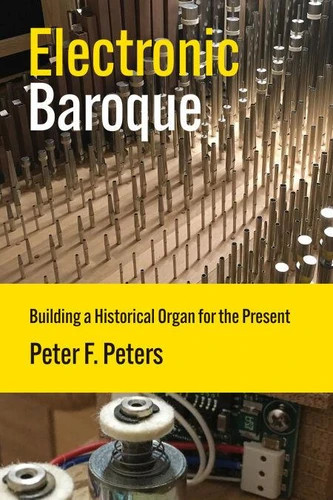
Electronic Baroque. Building a Historical Organ for the Present
Par :Formats :
Disponible dans votre compte client Decitre ou Furet du Nord dès validation de votre commande. Le format ePub protégé est :
- Compatible avec une lecture sur My Vivlio (smartphone, tablette, ordinateur)
- Compatible avec une lecture sur liseuses Vivlio
- Pour les liseuses autres que Vivlio, vous devez utiliser le logiciel Adobe Digital Edition. Non compatible avec la lecture sur les liseuses Kindle, Remarkable et Sony
- Non compatible avec un achat hors France métropolitaine
 , qui est-ce ?
Notre partenaire de plateforme de lecture numérique où vous retrouverez l'ensemble de vos ebooks gratuitement
Pour en savoir plus sur nos ebooks, consultez notre aide en ligne ici
C'est si simple ! Lisez votre ebook avec l'app Vivlio sur votre tablette, mobile ou ordinateur :

- Nombre de pages352
- FormatePub
- ISBN978-0-262-38518-3
- EAN9780262385183
- Date de parution26/08/2025
- Protection num.Adobe DRM
- Taille79 Mo
- Infos supplémentairesepub
- ÉditeurThe MIT Press
Résumé
A fascinating, real-time ethnography of the building of a unique musical instrument with both mechanical and electronic components. Electronic Baroque tells the story of how a baroque pipe organ with both a mechanical and an electronic interface was built. The book also explores how, in musical practices, the new comes into being. In 2013, the Orgelpark in Amsterdam, a concert venue dedicated to organists who want to give their instrument a new role in musical life, embarked on a project to make a unique instrument.
This new baroque organ project combined principles and practices from historically informed organ building with the design and application of new computer hardware and software. Drawing on hermeneutic, pragmatist, and post-actor network theoretical approaches to history and music, Peter Peters describes and analyzes how the dual design of the organ, facing both past and present, reiterates the long history of these instruments.
This new baroque organ project combined principles and practices from historically informed organ building with the design and application of new computer hardware and software. Drawing on hermeneutic, pragmatist, and post-actor network theoretical approaches to history and music, Peter Peters describes and analyzes how the dual design of the organ, facing both past and present, reiterates the long history of these instruments.