
Dr David Woodman is Fellow and Senior Tutor of Robinson College, University of Cambridge. His previous publications include Charters of Northern Houses, The Long Twelfth-Century View of the Anglo-Saxon Past and Writing, Kingship and Power in Anglo-Saxon England.
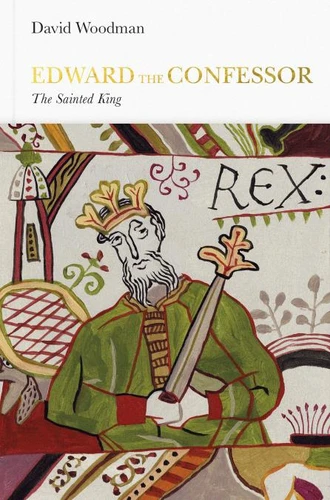
Edward the Confessor (Penguin Monarchs). The Sainted King
Par :Formats :
Disponible dans votre compte client Decitre ou Furet du Nord dès validation de votre commande. Le format ePub protégé est :
- Compatible avec une lecture sur My Vivlio (smartphone, tablette, ordinateur)
- Compatible avec une lecture sur liseuses Vivlio
- Pour les liseuses autres que Vivlio, vous devez utiliser le logiciel Adobe Digital Edition. Non compatible avec la lecture sur les liseuses Kindle, Remarkable et Sony
- Non compatible avec un achat hors France métropolitaine
 , qui est-ce ?
Notre partenaire de plateforme de lecture numérique où vous retrouverez l'ensemble de vos ebooks gratuitement
Pour en savoir plus sur nos ebooks, consultez notre aide en ligne ici
C'est si simple ! Lisez votre ebook avec l'app Vivlio sur votre tablette, mobile ou ordinateur :

- Nombre de pages128
- FormatePub
- ISBN978-0-241-38302-5
- EAN9780241383025
- Date de parution26/11/2020
- Protection num.Adobe DRM
- Infos supplémentairesepub
- ÉditeurPENGUIN
Résumé
Edward the Confessor, the last great king of Anglo-Saxon England, canonized nearly 100 years after his death, is in part a figure of myths created in the late middle ages. In this revealing portrait of England's royal saint, David Woodman traces the course of Edward's twenty-four-year-long reign through the lens of contemporary sources, from the Anglo-Saxon Chronicle and the Vita Ædwardi Regis to the Bayeux Tapestry, to separate myth from history and uncover the complex politics of his life.
He shows Edward to be a shrewd politician who, having endured a long period of exile from England in his youth, ascended the throne in 1042 and came to control a highly sophisticated and powerful administration. The twists and turns of Edward's reign are generally seen as a prelude to the Norman Conquest in 1066. Woodman explains clearly how events unfolded and personalities interacted but, unlike many, he shows a capable and impressive king at the centre of them.
He shows Edward to be a shrewd politician who, having endured a long period of exile from England in his youth, ascended the throne in 1042 and came to control a highly sophisticated and powerful administration. The twists and turns of Edward's reign are generally seen as a prelude to the Norman Conquest in 1066. Woodman explains clearly how events unfolded and personalities interacted but, unlike many, he shows a capable and impressive king at the centre of them.