SOLDES
Jusqu'à -70% sur une sélection d'articles*

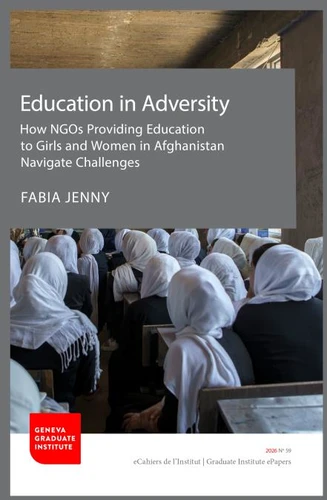
Education in Adversity. How NGOs Providing Education to Girls and Women in Afghanistan Navigate Challenges
Par :Formats :
Disponible dans votre compte client Decitre ou Furet du Nord dès validation de votre commande. Le format Multi-format est :
- Pour les liseuses autres que Vivlio, vous devez utiliser le logiciel Adobe Digital Edition. Non compatible avec la lecture sur les liseuses Kindle, Remarkable et Sony
 , qui est-ce ?
Notre partenaire de plateforme de lecture numérique où vous retrouverez l'ensemble de vos ebooks gratuitement
Pour en savoir plus sur nos ebooks, consultez notre aide en ligne ici
C'est si simple ! Lisez votre ebook avec l'app Vivlio sur votre tablette, mobile ou ordinateur :

- FormatMulti-format
- ISBN978-2-940600-63-2
- EAN9782940600632
- Date de parution22/01/2026
- Protection num.pas de protection
- Infos supplémentairesMulti-Format
- ÉditeurGraduate Institute Publications
Résumé
In 2022, the Taliban prohibited girls and women in Afghanistan from attending secondary school. Still, a range of NGOs continues to provide educational opportunities. This study examines how these organisations navigate challenges and build organisational resilience in fragile and high-risk environments. Eleven interviews with NGO representatives were conducted. The findings reveal that NGOs rely on interlinked adaptive capacities, defined as resources and the ability to mobilise them, and resilience-building strategies, understood as concrete strategic actions enabled by these capacities, to respond to external challenges and build resilience.
In practical terms, this study emphasises the importance of fostering intrinsic motivation and psychological well-being among volunteers and staff, promoting collaboration among organisations, and strengthening local grassroots efforts. It further highlights the role of local actors, especially women, in ensuring context-sensitive programme design and implementation. These insights contribute to a deeper understanding of how NGOs adapt to sustain education in crisis settings.
In practical terms, this study emphasises the importance of fostering intrinsic motivation and psychological well-being among volunteers and staff, promoting collaboration among organisations, and strengthening local grassroots efforts. It further highlights the role of local actors, especially women, in ensuring context-sensitive programme design and implementation. These insights contribute to a deeper understanding of how NGOs adapt to sustain education in crisis settings.