
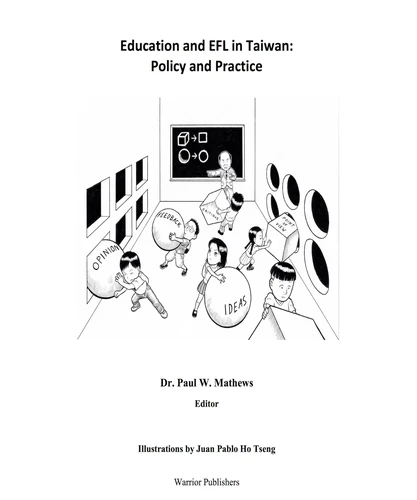
Education and EFL in Taiwan: Policy and Practice
Par :Formats :
Disponible dans votre compte client Decitre ou Furet du Nord dès validation de votre commande. Le format ePub est :
- Compatible avec une lecture sur My Vivlio (smartphone, tablette, ordinateur)
- Compatible avec une lecture sur liseuses Vivlio
- Pour les liseuses autres que Vivlio, vous devez utiliser le logiciel Adobe Digital Edition. Non compatible avec la lecture sur les liseuses Kindle, Remarkable et Sony
 , qui est-ce ?
Notre partenaire de plateforme de lecture numérique où vous retrouverez l'ensemble de vos ebooks gratuitement
Pour en savoir plus sur nos ebooks, consultez notre aide en ligne ici
C'est si simple ! Lisez votre ebook avec l'app Vivlio sur votre tablette, mobile ou ordinateur :

- FormatePub
- ISBN978-1-370-46441-8
- EAN9781370464418
- Date de parution14/04/2017
- Protection num.pas de protection
- Infos supplémentairesepub
- ÉditeurEditeurs divers USA
Résumé
The various chapters of this book focus on systemic problems and issues that lay much-but not all-of the ills of EFL teaching/learning and education generally in Taiwan squarely at the door of MoE and the various teaching institutions. Beginning with a brief overview of pre-school education and EFL, Part 1 focuses on direct observations of and reports on numerous actual teaching episodes in schools, from pre-school to University education levels.
Five papers form a series of studies employing the same methodology, as described in the papers. We aimed to examine the connection, or lack thereof, between MoE requirements/guidelines and the actual fulfillment of them, by focusing on the practical, everyday teaching and learning of EFL. What we essentially found was a consistent misfit between policy and practice, despite the best efforts of many of the teachers and schools.
In Part 2, Reflections, contributors reflect on their teaching experiences in Taiwan, and offer some suggestions for improvement. The concluding summary attempts to draw together some of these pertinent issues, wrestling with the notion that, despite goal posts constantly shifting, nothing really changes: rote learning, examinations, hierarchic structures and culturally-based vis-a-vis earned respect, cheating/plagiarism, credentialism, profiteering, linguistic incompetence, political infighting from the national level to the English Department level-all these persist, from the university/college level down to pre-school.
Five papers form a series of studies employing the same methodology, as described in the papers. We aimed to examine the connection, or lack thereof, between MoE requirements/guidelines and the actual fulfillment of them, by focusing on the practical, everyday teaching and learning of EFL. What we essentially found was a consistent misfit between policy and practice, despite the best efforts of many of the teachers and schools.
In Part 2, Reflections, contributors reflect on their teaching experiences in Taiwan, and offer some suggestions for improvement. The concluding summary attempts to draw together some of these pertinent issues, wrestling with the notion that, despite goal posts constantly shifting, nothing really changes: rote learning, examinations, hierarchic structures and culturally-based vis-a-vis earned respect, cheating/plagiarism, credentialism, profiteering, linguistic incompetence, political infighting from the national level to the English Department level-all these persist, from the university/college level down to pre-school.
A propos de Paul Mathews
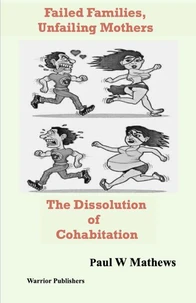

Bankrolling Poverty
E-book
1,99 €
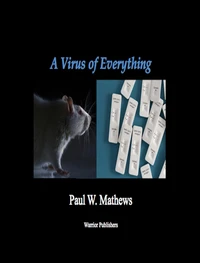
A Virus of Everything
E-book
1,99 €

1,99 €

2,99 €

A Tale of Two Families
E-book
1,99 €

2,99 €


1,99 €


2,99 €


Daze of Our Lives
E-book
1,99 €


1,99 €


1,99 €

My Riddle Book
E-book
0,99 €