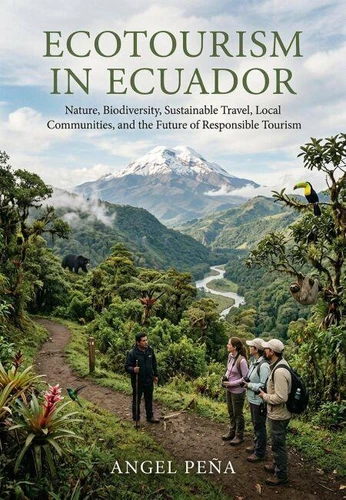
SynopsisEcotourism in Ecuador explores the extraordinary relationship between tourism, biodiversity, conservation, and local communities in one of the most biologically diverse countries on Earth. From the Andes and Amazon rainforest to the Chocó forests, coastal ecosystems, wetlands, and the legendary Galápagos Islands, this book examines the landscapes, wildlife, and communities that make Ecuador a remarkable destination for nature-based travel.
But ecotourism is more than simply visiting beautiful natural places. When properly planned and managed, tourism can support conservation, create economic opportunities, strengthen local communities, and educate visitors about the value of nature. At the same time, poorly managed tourism can disturb wildlife, damage habitats, consume natural resources, generate waste, and place additional pressure on fragile ecosystems.
Through a comprehensive and balanced examination, Ecotourism in Ecuador explores wildlife tourism, birdwatching, wildlife photography, protected areas, visitor management, community-based tourism, Indigenous knowledge, cultural heritage, sustainable tourism businesses, environmental impacts, climate change, and the future of responsible tourism. The book ultimately asks an important question: Can tourism become a genuine force for conservation while improving the well-being of the communities that live alongside Ecuador's natural heritage?Drawing on an interdisciplinary perspective that connects ecology, conservation, tourism, economics, sociology, geography, anthropology, and climate science, Ecotourism in Ecuador offers readers a deeper understanding of both the promise and the challenges of responsible tourism.
It is an invitation to discover Ecuador not simply as a destination, but as a living world whose forests, rivers, wildlife, islands, and communities deserve to be understood, respected, and protected for generations to come.
SynopsisEcotourism in Ecuador explores the extraordinary relationship between tourism, biodiversity, conservation, and local communities in one of the most biologically diverse countries on Earth. From the Andes and Amazon rainforest to the Chocó forests, coastal ecosystems, wetlands, and the legendary Galápagos Islands, this book examines the landscapes, wildlife, and communities that make Ecuador a remarkable destination for nature-based travel.
But ecotourism is more than simply visiting beautiful natural places. When properly planned and managed, tourism can support conservation, create economic opportunities, strengthen local communities, and educate visitors about the value of nature. At the same time, poorly managed tourism can disturb wildlife, damage habitats, consume natural resources, generate waste, and place additional pressure on fragile ecosystems.
Through a comprehensive and balanced examination, Ecotourism in Ecuador explores wildlife tourism, birdwatching, wildlife photography, protected areas, visitor management, community-based tourism, Indigenous knowledge, cultural heritage, sustainable tourism businesses, environmental impacts, climate change, and the future of responsible tourism. The book ultimately asks an important question: Can tourism become a genuine force for conservation while improving the well-being of the communities that live alongside Ecuador's natural heritage?Drawing on an interdisciplinary perspective that connects ecology, conservation, tourism, economics, sociology, geography, anthropology, and climate science, Ecotourism in Ecuador offers readers a deeper understanding of both the promise and the challenges of responsible tourism.
It is an invitation to discover Ecuador not simply as a destination, but as a living world whose forests, rivers, wildlife, islands, and communities deserve to be understood, respected, and protected for generations to come.


 , qui est-ce ?