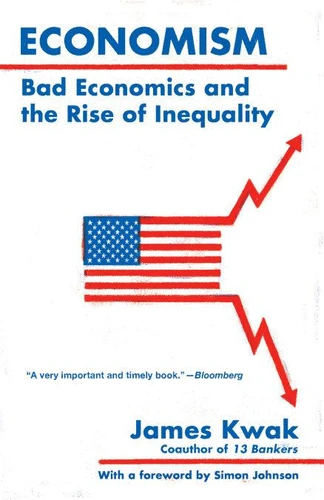
Economism. Bad Economics and the Rise of Inequality
Par : ,Formats :
Disponible dans votre compte client Decitre ou Furet du Nord dès validation de votre commande. Le format ePub protégé est :
- Compatible avec une lecture sur My Vivlio (smartphone, tablette, ordinateur)
- Compatible avec une lecture sur liseuses Vivlio
- Pour les liseuses autres que Vivlio, vous devez utiliser le logiciel Adobe Digital Edition. Non compatible avec la lecture sur les liseuses Kindle, Remarkable et Sony
- Non compatible avec un achat hors France métropolitaine
 , qui est-ce ?
Notre partenaire de plateforme de lecture numérique où vous retrouverez l'ensemble de vos ebooks gratuitement
Pour en savoir plus sur nos ebooks, consultez notre aide en ligne ici
C'est si simple ! Lisez votre ebook avec l'app Vivlio sur votre tablette, mobile ou ordinateur :

- Nombre de pages256
- FormatePub
- ISBN978-1-101-87120-1
- EAN9781101871201
- Date de parution10/01/2017
- Protection num.Adobe DRM
- Taille4 Mo
- Infos supplémentairesepub
- ÉditeurVintage
Résumé
Here is a bracing deconstruction of the framework for understanding the world that is learned as gospel in Economics 101, regardless of its imaginary assumptions and misleading half-truths. Economism: an ideology that distorts the valid principles and tools of introductory college economics, propagated by self-styled experts, zealous lobbyists, clueless politicians, and ignorant pundits. In order to illuminate the fallacies of economism, James Kwak first offers a primer on supply and demand, market equilibrium, and social welfare: the underpinnings of most popular economic arguments.
Then he provides a historical account of how economism became a prevalent mode of thought in the United States-focusing on the people who packaged Econ 101 into sound bites that were then repeated until they took on the aura of truth. He shows us how issues of moment in contemporary American society-labor markets, taxes, finance, health care, and international trade, among others-are shaped by economism, demonstrating in each case with clarity and élan how, because of its failure to reflect the complexities of our world, economism has had a deleterious influence on policies that affect hundreds of millions of Americans.
Then he provides a historical account of how economism became a prevalent mode of thought in the United States-focusing on the people who packaged Econ 101 into sound bites that were then repeated until they took on the aura of truth. He shows us how issues of moment in contemporary American society-labor markets, taxes, finance, health care, and international trade, among others-are shaped by economism, demonstrating in each case with clarity and élan how, because of its failure to reflect the complexities of our world, economism has had a deleterious influence on policies that affect hundreds of millions of Americans.