
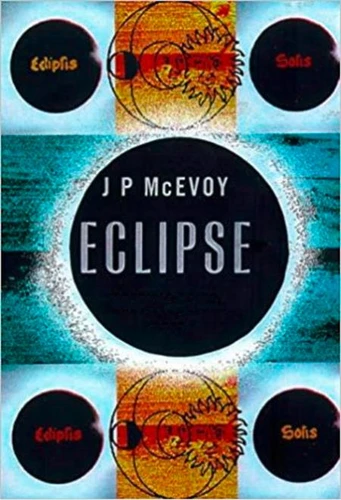
Eclipse. The science and history of nature's most spectacular phenomenon
Par :Formats :
Disponible dans votre compte client Decitre ou Furet du Nord dès validation de votre commande. Le format ePub protégé est :
- Compatible avec une lecture sur My Vivlio (smartphone, tablette, ordinateur)
- Compatible avec une lecture sur liseuses Vivlio
- Pour les liseuses autres que Vivlio, vous devez utiliser le logiciel Adobe Digital Edition. Non compatible avec la lecture sur les liseuses Kindle, Remarkable et Sony
- Non compatible avec un achat hors France métropolitaine
 , qui est-ce ?
Notre partenaire de plateforme de lecture numérique où vous retrouverez l'ensemble de vos ebooks gratuitement
Pour en savoir plus sur nos ebooks, consultez notre aide en ligne ici
C'est si simple ! Lisez votre ebook avec l'app Vivlio sur votre tablette, mobile ou ordinateur :

- Nombre de pages224
- FormatePub
- ISBN978-0-00-748030-2
- EAN9780007480302
- Date de parution20/04/2017
- Protection num.Adobe DRM
- Infos supplémentairesepub
- ÉditeurWilliam Collins
Résumé
J P McEvoy looks at remarkable phenomenon of a solar eclipse through a thrilling narrative that charts the historical, cultural and scientific relevance of solar eclipses through the ages and explores the significance of this rare event.
In the year when Britain will be touched by a solar eclipse for the first time since 1927, J P McEvoy looks at this remarkable phenomenon through a thrilling narrative that charts the historical, cultural and scientific relevance of solar eclipses through the ages and explores the significance of this rare event.
Eclipse shows how the English Astronomer Norman Lockyer named the element Helium from the spectra of the eclipsed Sun, and how in Cambridge Arthur Eddinton predicted the proof of Einstein's General Relativity from the bending of sunlight during the famous African eclipse of 1919.
During late morning on 11 August, 1999 the shadow of the last total eclipse of the Millennium will cut across the Cornwall Peninsula and skirt the coast of Devon before moving on to the continent, ending its journey at sunset in the Bay of Bengal, India.
Britain's next eclipse will be in September, 2090. Throughout history, mankind has exhibited a changing response to the eclipse of the sun. The ancient Mexicans believed the Sun and the Moon were quarrelling whilst the Tahitians thought the two celestial objects were making love. Today, astronomers can calculate the exact path the moon's shadow will track during the solar eclipse. As millions encamp for the brief spectacle with mylar glasses, pin-hole cameras, binoculars and telescopes, space agency satellites and mountain-top observatories study the corona, flares and the magnetosphere of the Sun as the 125 mile-wide black patch zooms along the ground at 2000 mph.
Britain's next eclipse will be in September, 2090. Throughout history, mankind has exhibited a changing response to the eclipse of the sun. The ancient Mexicans believed the Sun and the Moon were quarrelling whilst the Tahitians thought the two celestial objects were making love. Today, astronomers can calculate the exact path the moon's shadow will track during the solar eclipse. As millions encamp for the brief spectacle with mylar glasses, pin-hole cameras, binoculars and telescopes, space agency satellites and mountain-top observatories study the corona, flares and the magnetosphere of the Sun as the 125 mile-wide black patch zooms along the ground at 2000 mph.