SOLDES
Jusqu'à -70% sur une sélection d'articles*

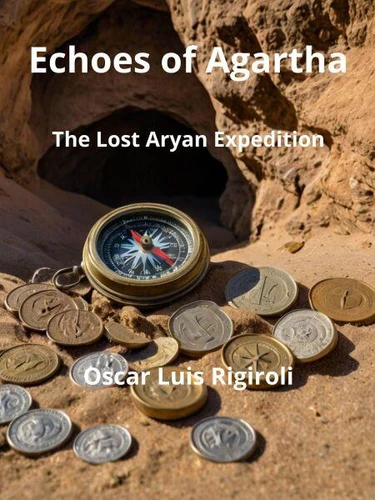
Echoes of Agartha-The Lost Aryan Expedition
Par :Formats :
Disponible dans votre compte client Decitre ou Furet du Nord dès validation de votre commande. Le format ePub est :
- Compatible avec une lecture sur My Vivlio (smartphone, tablette, ordinateur)
- Compatible avec une lecture sur liseuses Vivlio
- Pour les liseuses autres que Vivlio, vous devez utiliser le logiciel Adobe Digital Edition. Non compatible avec la lecture sur les liseuses Kindle, Remarkable et Sony
 , qui est-ce ?
Notre partenaire de plateforme de lecture numérique où vous retrouverez l'ensemble de vos ebooks gratuitement
Pour en savoir plus sur nos ebooks, consultez notre aide en ligne ici
C'est si simple ! Lisez votre ebook avec l'app Vivlio sur votre tablette, mobile ou ordinateur :

- FormatePub
- ISBN8227678935
- EAN9798227678935
- Date de parution16/10/2024
- Protection num.pas de protection
- Infos supplémentairesepub
- ÉditeurBig Dog Books, LLC
Résumé
The tale revolves around Wolfram von Eichenberg and Werner Scheimberg, members of a Nazi-sponsored expedition in 1938 to the Gobi Desert, aimed at proving theories about an Aryan origin in Asia. Their discovery of a mummified body challenges their expectations, revealing a Celtic-like figure instead of the expected Indo-European precursor. This find leads to tension with their superiors and raises doubts about the expedition's true purpose.
Wolfram's personal journey intertwines with Buddhist teachings and a profound encounter with a priestess, Tara, highlighting themes of spirituality and cultural clashes. The narrative concludes with a significant archaeological discovery that hints at deeper mysteries beneath the desert sands. The story provides a vivid portrayal of historical intrigue, blending archaeological exploration with esoteric beliefs and personal transformation.
It effectively captures the tension between scientific discovery and ideological expectations within the context of Nazi Germany's Ahnenerbe and Thule Society. The characters' motivations and conflicts are well-developed, especially Wolfram's internal struggle with Nazi racial theories and his spiritual awakening through Buddhist teachings and his relationship with Tara. The narrative arc is compelling, drawing readers into a world of mystery and conflicting ideologies set against the backdrop of a remote and enigmatic landscape.
Wolfram's personal journey intertwines with Buddhist teachings and a profound encounter with a priestess, Tara, highlighting themes of spirituality and cultural clashes. The narrative concludes with a significant archaeological discovery that hints at deeper mysteries beneath the desert sands. The story provides a vivid portrayal of historical intrigue, blending archaeological exploration with esoteric beliefs and personal transformation.
It effectively captures the tension between scientific discovery and ideological expectations within the context of Nazi Germany's Ahnenerbe and Thule Society. The characters' motivations and conflicts are well-developed, especially Wolfram's internal struggle with Nazi racial theories and his spiritual awakening through Buddhist teachings and his relationship with Tara. The narrative arc is compelling, drawing readers into a world of mystery and conflicting ideologies set against the backdrop of a remote and enigmatic landscape.
A propos de Oscar Luis Rigiroli


Horizonte Reflexivo
E-book
2,99 €

2,99 €

2,99 €

3,99 €

3,99 €

Elfi nella Foresta
E-book
3,99 €

Elves in the Woods
E-book
3,99 €

An Everlasting Quest
E-book
3,99 €



3,99 €

3,99 €


3,99 €