
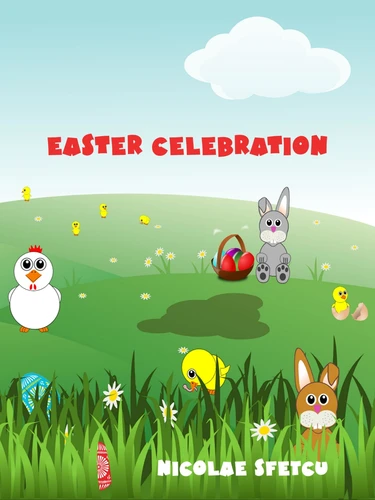
Easter Celebration
Par :Formats :
Disponible dans votre compte client Decitre ou Furet du Nord dès validation de votre commande. Le format ePub est :
- Compatible avec une lecture sur My Vivlio (smartphone, tablette, ordinateur)
- Compatible avec une lecture sur liseuses Vivlio
- Pour les liseuses autres que Vivlio, vous devez utiliser le logiciel Adobe Digital Edition. Non compatible avec la lecture sur les liseuses Kindle, Remarkable et Sony
 , qui est-ce ?
Notre partenaire de plateforme de lecture numérique où vous retrouverez l'ensemble de vos ebooks gratuitement
Pour en savoir plus sur nos ebooks, consultez notre aide en ligne ici
C'est si simple ! Lisez votre ebook avec l'app Vivlio sur votre tablette, mobile ou ordinateur :

- FormatePub
- ISBN978-1-311-72277-5
- EAN9781311722775
- Date de parution19/03/2015
- Protection num.pas de protection
- Infos supplémentairesepub
- ÉditeurJPCA
Résumé
Easter is the most important solemnity (just before Christmas) of the Church. It is the first of the five cardinal feasts of the Catholic liturgical year. Easter commemorates the resurrection of Jesus Christ laid down by the Bible, the third day after his passion. The solemnity begins on Easter Sunday, which for Catholics mark the end of fasting of Lent, and lasts for eight days (Easter week, or week or radiant, or week of eight Sundays).
Many customs dating back to ancient times designed to accommodate the return of spring attached themselves to Easter. The egg is the symbol of germination occurs in early spring. Similarly, the hare is an ancient symbol which has always represented fertility. The custom of the Easter egg was found among Coptic Christians from the late fifth century, it is perhaps in memory of ardent eggs (ova ignita) with which the martyrs were tortured or red egg laid by an imperial hen the day of the birth of Alexander Severus in 208 BC.
The tradition of offering eggs in spring dates back to antiquity: the Persians, the Egyptians offered, as a lucky, decorated hen eggs as renewal sign. The rabbit once symbolizing fertility and renewal (like spring), it was in Upper Germany where was born the tradition (Osterhase) before it spreads in the Germanic countries. Subsequently, this tradition is exported to the United States by German immigrants in the eighteenth century.
Many customs dating back to ancient times designed to accommodate the return of spring attached themselves to Easter. The egg is the symbol of germination occurs in early spring. Similarly, the hare is an ancient symbol which has always represented fertility. The custom of the Easter egg was found among Coptic Christians from the late fifth century, it is perhaps in memory of ardent eggs (ova ignita) with which the martyrs were tortured or red egg laid by an imperial hen the day of the birth of Alexander Severus in 208 BC.
The tradition of offering eggs in spring dates back to antiquity: the Persians, the Egyptians offered, as a lucky, decorated hen eggs as renewal sign. The rabbit once symbolizing fertility and renewal (like spring), it was in Upper Germany where was born the tradition (Osterhase) before it spreads in the Germanic countries. Subsequently, this tradition is exported to the United States by German immigrants in the eighteenth century.
A propos de Nicolae Sfetcu


1,99 €



1,99 €



1,99 €


3,49 €


1,99 €




1,99 €


