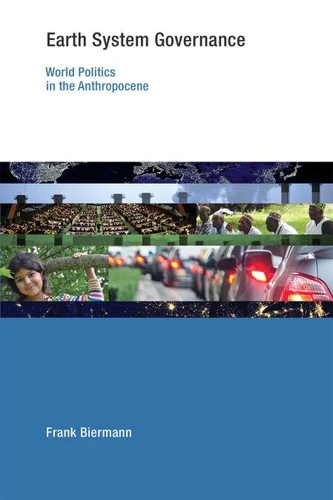
Earth System Governance. World Politics in the Anthropocene
Par :Formats :
Disponible dans votre compte client Decitre ou Furet du Nord dès validation de votre commande. Le format ePub protégé est :
- Compatible avec une lecture sur My Vivlio (smartphone, tablette, ordinateur)
- Compatible avec une lecture sur liseuses Vivlio
- Pour les liseuses autres que Vivlio, vous devez utiliser le logiciel Adobe Digital Edition. Non compatible avec la lecture sur les liseuses Kindle, Remarkable et Sony
- Non compatible avec un achat hors France métropolitaine
 , qui est-ce ?
Notre partenaire de plateforme de lecture numérique où vous retrouverez l'ensemble de vos ebooks gratuitement
Pour en savoir plus sur nos ebooks, consultez notre aide en ligne ici
C'est si simple ! Lisez votre ebook avec l'app Vivlio sur votre tablette, mobile ou ordinateur :

- Nombre de pages288
- FormatePub
- ISBN978-0-262-32293-5
- EAN9780262322935
- Date de parution28/11/2014
- Protection num.Adobe DRM
- Taille2 Mo
- Infos supplémentairesepub
- ÉditeurThe MIT Press
Résumé
A new model for effective global environmental governance in an era of human-caused planetary transformation and disruption. Humans are no longer spectators who need to adapt to their natural environment. Our impact on the earth has caused changes that are outside the range of natural variability and are equivalent to such major geological disruptions as ice ages. Some scientists argue that we have entered a new epoch in planetary history: the Anthropocene.
In such an era of planet-wide transformation, we need a new model for planet-wide environmental politics. In this book, Frank Biermann proposes "earth system" governance as just such a new paradigm. Biermann offers both analytical and normative perspectives. He provides detailed analysis of global environmental politics in terms of five dimensions of effective governance: agency, particularly agency beyond that of state actors; architecture of governance, from local to global levels; accountability and legitimacy; equitable allocation of resources; and adaptiveness of governance systems.
Biermann goes on to offer a wide range of policy proposals for future environmental governance and a revitalized United Nations, including the establishment of a World Environment Organization and a UN Sustainable Development Council, new mechanisms for strengthened representation of civil society and scientists in global decision making, innovative systems of qualified majority voting in multilateral negotiations, and novel institutions to protect those impacted by global change.
Drawing on ten years of research, Biermann formulates earth system governance as an empirical reality and a political necessity.
In such an era of planet-wide transformation, we need a new model for planet-wide environmental politics. In this book, Frank Biermann proposes "earth system" governance as just such a new paradigm. Biermann offers both analytical and normative perspectives. He provides detailed analysis of global environmental politics in terms of five dimensions of effective governance: agency, particularly agency beyond that of state actors; architecture of governance, from local to global levels; accountability and legitimacy; equitable allocation of resources; and adaptiveness of governance systems.
Biermann goes on to offer a wide range of policy proposals for future environmental governance and a revitalized United Nations, including the establishment of a World Environment Organization and a UN Sustainable Development Council, new mechanisms for strengthened representation of civil society and scientists in global decision making, innovative systems of qualified majority voting in multilateral negotiations, and novel institutions to protect those impacted by global change.
Drawing on ten years of research, Biermann formulates earth system governance as an empirical reality and a political necessity.