SOLDES
Jusqu'à -70% sur une sélection d'articles*

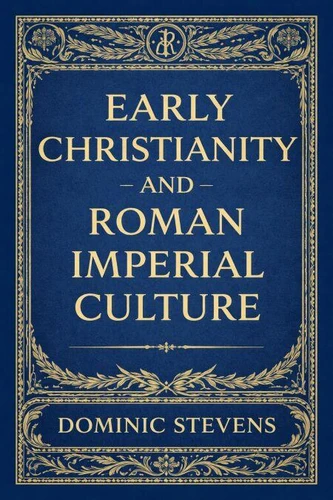
Early Christianity and Roman Imperial Culture
Par :Formats :
Disponible dans votre compte client Decitre ou Furet du Nord dès validation de votre commande. Le format ePub est :
- Compatible avec une lecture sur My Vivlio (smartphone, tablette, ordinateur)
- Compatible avec une lecture sur liseuses Vivlio
- Pour les liseuses autres que Vivlio, vous devez utiliser le logiciel Adobe Digital Edition. Non compatible avec la lecture sur les liseuses Kindle, Remarkable et Sony
 , qui est-ce ?
Notre partenaire de plateforme de lecture numérique où vous retrouverez l'ensemble de vos ebooks gratuitement
Pour en savoir plus sur nos ebooks, consultez notre aide en ligne ici
C'est si simple ! Lisez votre ebook avec l'app Vivlio sur votre tablette, mobile ou ordinateur :

- FormatePub
- ISBN8232105495
- EAN9798232105495
- Date de parution05/04/2026
- Protection num.pas de protection
- Infos supplémentairesepub
- ÉditeurDraft2Digital
Résumé
Christianity was born into a world that, at first glance, seemed entirely inhospitable to its message. The Roman Empire, stretching from the misty shores of Britain to the deserts of Arabia, presented itself as the pinnacle of human civilization: a political and cultural colossus whose laws, armies, and traditions shaped the lives of millions. Yet within this vast imperial order, in a small and seemingly insignificant province, the most consequential event in human history took place.
The Word became flesh, and the life of the God-Man unfolded under the watchful eyes of Roman administrators, soldiers, and magistrates. The early Church, from its first breath, existed in the shadow of imperial power. This book seeks to explore that encounter-sometimes peaceful, often tense, and ultimately transformative-from a perspective that sees divine providence guiding history toward the fulfillment of God's salvific plan.
The Word became flesh, and the life of the God-Man unfolded under the watchful eyes of Roman administrators, soldiers, and magistrates. The early Church, from its first breath, existed in the shadow of imperial power. This book seeks to explore that encounter-sometimes peaceful, often tense, and ultimately transformative-from a perspective that sees divine providence guiding history toward the fulfillment of God's salvific plan.