SOLDES
Jusqu'à -70% sur une sélection d'articles*

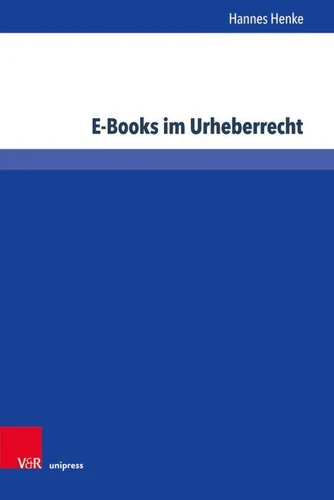
E-Books im Urheberrecht. Kollision von Buchkultur und digitaler Wissensgesellschaft
Par :Formats :
Disponible dans votre compte client Decitre ou Furet du Nord dès validation de votre commande. Le format PDF est :
- Compatible avec une lecture sur My Vivlio (smartphone, tablette, ordinateur)
- Compatible avec une lecture sur liseuses Vivlio
- Pour les liseuses autres que Vivlio, vous devez utiliser le logiciel Adobe Digital Edition. Non compatible avec la lecture sur les liseuses Kindle, Remarkable et Sony
 , qui est-ce ?
Notre partenaire de plateforme de lecture numérique où vous retrouverez l'ensemble de vos ebooks gratuitement
Pour en savoir plus sur nos ebooks, consultez notre aide en ligne ici
C'est si simple ! Lisez votre ebook avec l'app Vivlio sur votre tablette, mobile ou ordinateur :

- Nombre de pages225
- FormatPDF
- ISBN978-3-8470-0904-7
- EAN9783847009047
- Date de parution12/11/2018
- Protection num.pas de protection
- Taille2 Mo
- Infos supplémentairespdf
- ÉditeurV&R Unipress
Résumé
Die Buchkultur war regelmäßig Triebkraft für urheberrechtliche Entwicklungen. Es verwundert daher nicht, dass das »Kulturgut Buch« abseits vom Wettbewerbsrecht und Steuerrecht auch im Urheberrecht in besonderem Maße Berücksichtigung findet. So hält das Urheberrecht für die Nutzung gedruckter Bücher vielfältige Mechanismen zum Ausgleich der Interessen zwischen Autoren, Lesern und Intermediären bereit.
Aber warum sieht das nationale Urheberrecht nicht auch solch einen umfassenden Interessenausgleich für die Nutzung von E-Books vor, obwohl dies im Einklang mit europäischen Regelungen möglich wäre? Hannes Henke zeigt, dass die Buchkultur durch ihre Transformation in die digitale Welt abermals den Blick für ein zeitgemäßes Urheberrecht schärfen könnte. Book culture always has been a driving force for the development of copyright law.
Therefore, it is not surprising that there is a strong consideration of books as cultural assets not only in competition law and the law of taxation but also in copyright law. A current analysis reveals that the digital format of literature has a significant impact on the coordination of authors', readers' and intermediaries' interests that is intended by copyright law. Next to the collective rights management and despite adjustments by the German legislature, there are still legal gaps within current German copyright law that lead to indirect discrimination between books in a digital or non-digital format.
Once again, by developing alongside the digital society, the book culture may sensitize for a modern copyright law.
Aber warum sieht das nationale Urheberrecht nicht auch solch einen umfassenden Interessenausgleich für die Nutzung von E-Books vor, obwohl dies im Einklang mit europäischen Regelungen möglich wäre? Hannes Henke zeigt, dass die Buchkultur durch ihre Transformation in die digitale Welt abermals den Blick für ein zeitgemäßes Urheberrecht schärfen könnte. Book culture always has been a driving force for the development of copyright law.
Therefore, it is not surprising that there is a strong consideration of books as cultural assets not only in competition law and the law of taxation but also in copyright law. A current analysis reveals that the digital format of literature has a significant impact on the coordination of authors', readers' and intermediaries' interests that is intended by copyright law. Next to the collective rights management and despite adjustments by the German legislature, there are still legal gaps within current German copyright law that lead to indirect discrimination between books in a digital or non-digital format.
Once again, by developing alongside the digital society, the book culture may sensitize for a modern copyright law.