
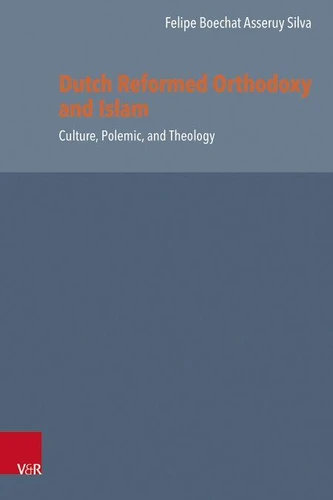
Dutch Reformed Orthodoxy and Islam. Culture, Polemic, and Theology
Par :Formats :
Disponible dans votre compte client Decitre ou Furet du Nord dès validation de votre commande. Le format PDF est :
- Compatible avec une lecture sur My Vivlio (smartphone, tablette, ordinateur)
- Compatible avec une lecture sur liseuses Vivlio
- Pour les liseuses autres que Vivlio, vous devez utiliser le logiciel Adobe Digital Edition. Non compatible avec la lecture sur les liseuses Kindle, Remarkable et Sony
 , qui est-ce ?
Notre partenaire de plateforme de lecture numérique où vous retrouverez l'ensemble de vos ebooks gratuitement
Pour en savoir plus sur nos ebooks, consultez notre aide en ligne ici
C'est si simple ! Lisez votre ebook avec l'app Vivlio sur votre tablette, mobile ou ordinateur :

- Nombre de pages320
- FormatPDF
- ISBN978-3-647-56098-4
- EAN9783647560984
- Date de parution10/03/2025
- Protection num.pas de protection
- Taille7 Mo
- Infos supplémentairespdf
- ÉditeurVandenhoeck & Ruprecht
Résumé
However turbulent and virulent Christian-Muslim Relations may have been throughout the centuries it does not mean that each side did not take the time to evaluate and appreciate each other's theological dogmas. Felipe Boechat Asseruy Silva shows that although Christians were subjected to constant attacks and invasions by the "Turks" for multiple centuries, they eventually (Early Modern Period) sought to refine their thinking about Islam and evaluate its theological tenets in a semi-dispassionate form and to provide a large-scale reply.
In the Medieval period in-depth analysis of Islam, from a purely theological/philosophical point of view, were rare. Most publications frequently resorted to the use of offensive and inaccurate language, which, at times, fomented a disagreement between the parties based not on real theological differences - besides the obvious political differences -, but on imagined ones. This volume shows that Post-Reformation Reformed Orthodox theologians, especially those from the Dutch Republic, after having access to a long legacy of Christian-Muslim written publications collected by Dutch Universities, were able to build much more refined arguments and indeed present well informed apologetical, theological and historical arguments against Islam.
The author also shows that the intense commerce between Christian and Islamic nations and the contemporary flourishing of orientalist studies in the Dutch Universities contributed to the formation of an intellectual arena that was willing to overlook past animosities and focus on the theological differences, addressing them as such.
In the Medieval period in-depth analysis of Islam, from a purely theological/philosophical point of view, were rare. Most publications frequently resorted to the use of offensive and inaccurate language, which, at times, fomented a disagreement between the parties based not on real theological differences - besides the obvious political differences -, but on imagined ones. This volume shows that Post-Reformation Reformed Orthodox theologians, especially those from the Dutch Republic, after having access to a long legacy of Christian-Muslim written publications collected by Dutch Universities, were able to build much more refined arguments and indeed present well informed apologetical, theological and historical arguments against Islam.
The author also shows that the intense commerce between Christian and Islamic nations and the contemporary flourishing of orientalist studies in the Dutch Universities contributed to the formation of an intellectual arena that was willing to overlook past animosities and focus on the theological differences, addressing them as such.