"I think, " she said, "we have everything we need."Nadia Vasquez always does. Fourteen years as a forensic accountant have made her one of the best in the business - precise, methodical, and very careful about whose interests her accuracy serves. She has learned to file the uncomfortable questions in the back of her mind and keep her reports clean. When Griggs Partners sends her to assess the collapse of Aldermoor Capital, a hedge fund that unraveled under what the financial press is calling liquidity irregularities, it is exactly the kind of engagement she has handled before.
Find the damage. Name it at the correct angle. Produce the report that protects the right people. Then she finds a footnote on page forty-three. The footnote leads to a vehicle that isn't in the fund's structure documentation. The vehicle leads to a parallel fee extraction scheme that has been quietly draining investor capital for years. And somewhere in the architecture of shell entities and offshore accounts, Nadia begins to understand that she has not been hired to investigate the fraud.
She has been hired to contain it. Jordan Ayres is the former analyst who saw it first. She filed a whistleblower complaint with the SEC fourteen months ago, watched the investigation close without action, lost two jobs, and kept building her case anyway - document by document, layer by layer, with the patient precision of someone who has been right for too long to stop. Nadia has been tasked with assessing Jordan's credibility.
What she finds, instead, is a woman whose evidence is meticulous, whose timeline is exact, and whose account has no inconsistencies that Nadia's own calculations cannot explain. The more Nadia looks, the more clearly she sees the shape of what she's been asked to do. The managing partner who retained her has a financial relationship with the fraud's architect that predates the collapse by over a year.
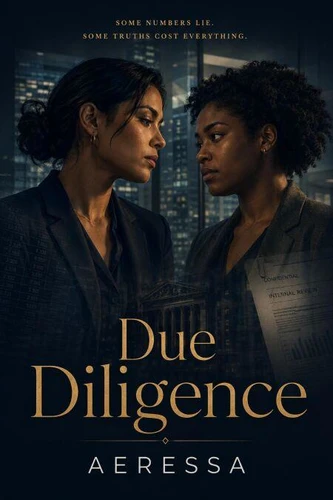
The memo Nadia writes - the careful, technically accurate memo that frames a structural crime as a reporting methodology question - earns exactly the reply she was afraid it would earn. And Jordan, who has been watching assessors come and go for six years, has been releasing her evidence document by document, waiting to see what Nadia does with each piece. Due Diligence is a tightly wound thriller about two women navigating the architecture of professional complicity - the accumulated small choices that make a clean report possible and the moment when clean and honest are no longer the same word.
It is a story about who gets to define the accurate account, and what it costs to produce one.
"I think, " she said, "we have everything we need."Nadia Vasquez always does. Fourteen years as a forensic accountant have made her one of the best in the business - precise, methodical, and very careful about whose interests her accuracy serves. She has learned to file the uncomfortable questions in the back of her mind and keep her reports clean. When Griggs Partners sends her to assess the collapse of Aldermoor Capital, a hedge fund that unraveled under what the financial press is calling liquidity irregularities, it is exactly the kind of engagement she has handled before.
Find the damage. Name it at the correct angle. Produce the report that protects the right people. Then she finds a footnote on page forty-three. The footnote leads to a vehicle that isn't in the fund's structure documentation. The vehicle leads to a parallel fee extraction scheme that has been quietly draining investor capital for years. And somewhere in the architecture of shell entities and offshore accounts, Nadia begins to understand that she has not been hired to investigate the fraud.
She has been hired to contain it. Jordan Ayres is the former analyst who saw it first. She filed a whistleblower complaint with the SEC fourteen months ago, watched the investigation close without action, lost two jobs, and kept building her case anyway - document by document, layer by layer, with the patient precision of someone who has been right for too long to stop. Nadia has been tasked with assessing Jordan's credibility.
What she finds, instead, is a woman whose evidence is meticulous, whose timeline is exact, and whose account has no inconsistencies that Nadia's own calculations cannot explain. The more Nadia looks, the more clearly she sees the shape of what she's been asked to do. The managing partner who retained her has a financial relationship with the fraud's architect that predates the collapse by over a year.
The memo Nadia writes - the careful, technically accurate memo that frames a structural crime as a reporting methodology question - earns exactly the reply she was afraid it would earn. And Jordan, who has been watching assessors come and go for six years, has been releasing her evidence document by document, waiting to see what Nadia does with each piece. Due Diligence is a tightly wound thriller about two women navigating the architecture of professional complicity - the accumulated small choices that make a clean report possible and the moment when clean and honest are no longer the same word.
It is a story about who gets to define the accurate account, and what it costs to produce one.


 , qui est-ce ?