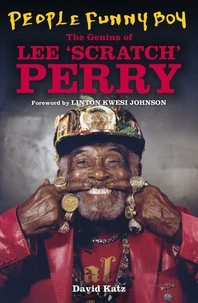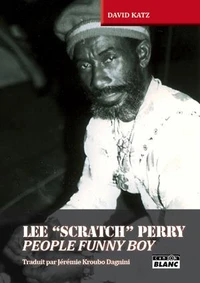
The author of People Funny Boy: The Genius of Lee 'Scratch' Perry and Solid Foundation: An Oral History of Reggae, DAVID KATZ has written about the sounds and culture of Jamaica since 1984. His work has appeared in various music books and periodicals, including the Guardian, Mojo and the Wire; he has produced diverse radio and film documentaries and remains active as a vinyl DJ. Originally from San Francisco, he currently lives in London.
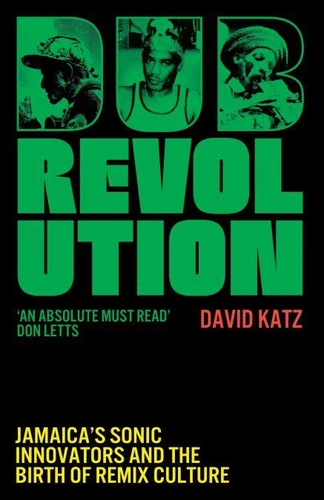
Dub Revolution. Jamaica’s Sonic Innovators and the Birth of Remix Culture
Par :Formats :
Disponible dans votre compte client Decitre ou Furet du Nord dès validation de votre commande. Le format ePub protégé est :
- Compatible avec une lecture sur My Vivlio (smartphone, tablette, ordinateur)
- Compatible avec une lecture sur liseuses Vivlio
- Pour les liseuses autres que Vivlio, vous devez utiliser le logiciel Adobe Digital Edition. Non compatible avec la lecture sur les liseuses Kindle, Remarkable et Sony
- Non compatible avec un achat hors France métropolitaine
 , qui est-ce ?
Notre partenaire de plateforme de lecture numérique où vous retrouverez l'ensemble de vos ebooks gratuitement
Pour en savoir plus sur nos ebooks, consultez notre aide en ligne ici
C'est si simple ! Lisez votre ebook avec l'app Vivlio sur votre tablette, mobile ou ordinateur :

- Nombre de pages384
- FormatePub
- ISBN978-1-3996-1917-2
- EAN9781399619172
- Date de parution02/07/2026
- Protection num.Adobe DRM
- Infos supplémentairesepub
- ÉditeurWhite Rabbit
Résumé
The most abstract, playful and confounding of reggae subgenres, dub is a vital component of sound system culture that has wielded disproportionate influence. Emerging as an underground phenomenon in Kingston during the early 1970s, dub was wrought by sonic alchemists such as King Tubby, Lee 'Scratch' Perry, Prince Jammy and Scientist, conjuring musical mutations at the mixing desk. Dub reached other lands through the Jamaican diaspora and as Lloyd 'Bullwackie' Barnes furthered the form in New York, Dennis Bovell, Mad Professor and Adrian Sherwood conjured their own dub masterworks in London, Jah Shaka and his acolytes subsequently helping dub to achieve global reach.
Widely adopted by post-punk producers and later a crucial influence on the underground dance music scenes of several continents, dub indelibly changed the techniques and aesthetics of music production with far-reaching effects; it's no exaggeration to say that without dub, there would be no hip-hop or house music. Dub is made from studio trickery, its auteurs fashioning something new by subtraction rather than addition, reversing standard recording techniques.
It is a music of absence and deception, a ghostly sonic doppelganger with bass primacy and torpedoed song structures, full of holes and unexpected twists. The evolution of dub marks the birth of the remix and the emergence of the studio as an instrument in itself, a place where songs can be pulled apart and given wild reshaping, rendering a disembodied new form that is often cosmic and typically jagged.
Dub's progression is also inseparable from the troubled history of post-colonial Jamaica, blighted by caustic Cold War interventions, attendant gang culture and communal breakdowns. Through first-hand testimony with dub's most noteworthy creatives, David Katz's monumental forensic history of an astounding subgenre that sounds like the future five decades after its inception stands as the authoritative book on a musical art form that continues to fascinate, generation after generation.
Widely adopted by post-punk producers and later a crucial influence on the underground dance music scenes of several continents, dub indelibly changed the techniques and aesthetics of music production with far-reaching effects; it's no exaggeration to say that without dub, there would be no hip-hop or house music. Dub is made from studio trickery, its auteurs fashioning something new by subtraction rather than addition, reversing standard recording techniques.
It is a music of absence and deception, a ghostly sonic doppelganger with bass primacy and torpedoed song structures, full of holes and unexpected twists. The evolution of dub marks the birth of the remix and the emergence of the studio as an instrument in itself, a place where songs can be pulled apart and given wild reshaping, rendering a disembodied new form that is often cosmic and typically jagged.
Dub's progression is also inseparable from the troubled history of post-colonial Jamaica, blighted by caustic Cold War interventions, attendant gang culture and communal breakdowns. Through first-hand testimony with dub's most noteworthy creatives, David Katz's monumental forensic history of an astounding subgenre that sounds like the future five decades after its inception stands as the authoritative book on a musical art form that continues to fascinate, generation after generation.