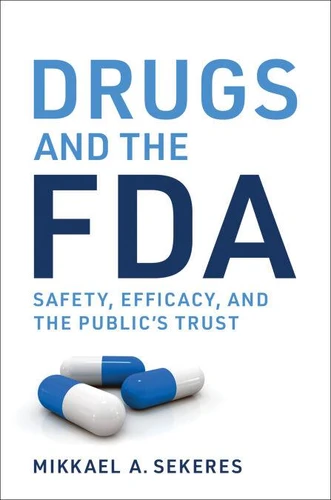
How the FDA was shaped by public health crises and patient advocacy, told against a background of the contentious hearings on the breast cancer drug Avastin. Food and Drug Administration approval for COVID-19 vaccines and the controversial Alzheimer's drug Aduhelm made headlines, but few of us know much about how the agency does its work. Why is the FDA the ultimate US authority on a drug's safety and efficacy? In Drugs and the FDA, Mikkael Sekeres-a leading oncologist and former chair of the FDA's cancer drug advisory committee-tells the story of how the FDA became the most trusted regulatory agency in the world.
It took a series of tragedies and health crises, as well as patient advocacy, for the government to take responsibility for ensuring the efficacy and safety of drugs and medical devices. Before the FDA existed, drug makers could hawk any potion, claim treatment of any ailment, and make any promise on a label. But then, throughout the twentieth century, the government was forced to take action when children were poisoned by contaminated diphtheria and smallpox vaccines, an early antibiotic contained antifreeze, a drug prescribed for morning sickness in pregnancy caused babies to be born disfigured, and access to AIDS drugs was limited to a few clinical trials while thousands died.
Sekeres describes all these events against the backdrop of the contentious 2011 hearings on the breast cancer drug Avastin, in which he participated as a panel member. The Avastin hearings, he says, put to the test a century of the FDA's evolution, demonstrating how its system of checks and balances works-or doesn't work.
How the FDA was shaped by public health crises and patient advocacy, told against a background of the contentious hearings on the breast cancer drug Avastin. Food and Drug Administration approval for COVID-19 vaccines and the controversial Alzheimer's drug Aduhelm made headlines, but few of us know much about how the agency does its work. Why is the FDA the ultimate US authority on a drug's safety and efficacy? In Drugs and the FDA, Mikkael Sekeres-a leading oncologist and former chair of the FDA's cancer drug advisory committee-tells the story of how the FDA became the most trusted regulatory agency in the world.
It took a series of tragedies and health crises, as well as patient advocacy, for the government to take responsibility for ensuring the efficacy and safety of drugs and medical devices. Before the FDA existed, drug makers could hawk any potion, claim treatment of any ailment, and make any promise on a label. But then, throughout the twentieth century, the government was forced to take action when children were poisoned by contaminated diphtheria and smallpox vaccines, an early antibiotic contained antifreeze, a drug prescribed for morning sickness in pregnancy caused babies to be born disfigured, and access to AIDS drugs was limited to a few clinical trials while thousands died.
Sekeres describes all these events against the backdrop of the contentious 2011 hearings on the breast cancer drug Avastin, in which he participated as a panel member. The Avastin hearings, he says, put to the test a century of the FDA's evolution, demonstrating how its system of checks and balances works-or doesn't work.

 , qui est-ce ?
