
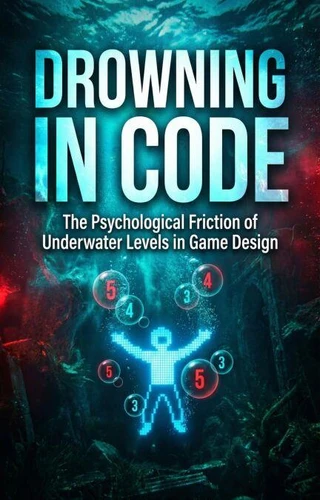
Drowning in Code. The Psychological Friction of Underwater Levels in Game Design
Par :Formats :
Disponible dans votre compte client Decitre ou Furet du Nord dès validation de votre commande. Le format ePub est :
- Compatible avec une lecture sur My Vivlio (smartphone, tablette, ordinateur)
- Compatible avec une lecture sur liseuses Vivlio
- Pour les liseuses autres que Vivlio, vous devez utiliser le logiciel Adobe Digital Edition. Non compatible avec la lecture sur les liseuses Kindle, Remarkable et Sony
 , qui est-ce ?
Notre partenaire de plateforme de lecture numérique où vous retrouverez l'ensemble de vos ebooks gratuitement
Pour en savoir plus sur nos ebooks, consultez notre aide en ligne ici
C'est si simple ! Lisez votre ebook avec l'app Vivlio sur votre tablette, mobile ou ordinateur :

- Nombre de pages175
- FormatePub
- ISBN978-3-565-29300-1
- EAN9783565293001
- Date de parution04/03/2026
- Protection num.pas de protection
- Taille643 Ko
- Infos supplémentairesepub
- ÉditeurEmphaloz Publishing House
Résumé
Ask any veteran gamer about their most frustrating memories, and they will inevitably mention the Water Temple from Ocarina of Time or the panic-inducing countdown music in Sonic the Hedgehog. Underwater levels are universally dreaded. But this widespread hatred is not a coincidence; it is the result of a profound neurological friction deliberately engineered by game developers.
When a character enters the water, the fundamental physics of the virtual world change.
Gravity is altered, movement becomes sluggish, and the carefully honed muscle memory the player has developed is instantly rendered useless. Add to this the introduction of a new, depleting resource-oxygen-and you transform an exploratory game into a claustrophobic, high-stakes time management crisis. Developers use these zones to intentionally break the player's sense of mastery and flow. This book dissects the controversial mechanics of aquatic game design.
It explores why slowing down the player and restricting their agency is a dangerous but sometimes necessary tool for pacing, and how the best designers balance the absolute dread of drowning with the profound relief of finally breaking the surface.
Gravity is altered, movement becomes sluggish, and the carefully honed muscle memory the player has developed is instantly rendered useless. Add to this the introduction of a new, depleting resource-oxygen-and you transform an exploratory game into a claustrophobic, high-stakes time management crisis. Developers use these zones to intentionally break the player's sense of mastery and flow. This book dissects the controversial mechanics of aquatic game design.
It explores why slowing down the player and restricting their agency is a dangerous but sometimes necessary tool for pacing, and how the best designers balance the absolute dread of drowning with the profound relief of finally breaking the surface.