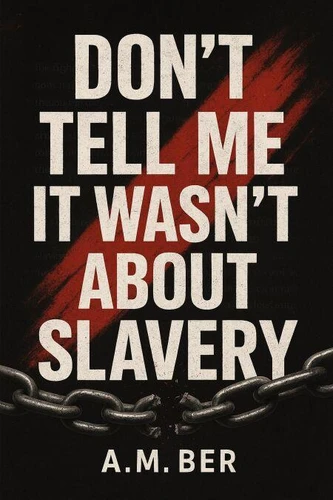
For generations, Americans have been told a comforting lie: that slavery was only a side issue, that the Civil War was really about "states' rights, " economics, or cultural differences. But, the historical record tells a very different story. Don't Tell Me It Wasn't About Slavery examines what the people who defended slavery actually said, wrote, and fought for, and what later generations worked hard to erase.
Drawing directly from secession documents, speeches, laws, and firsthand accounts, this book exposes how slavery was not a background issue but the foundation of the Confederate cause and a central pillar of American power and wealth. This is not a book of opinions. It is a book of evidence. With clear language and careful documentation, the author dismantles Lost Cause mythology, explains why slavery could not be separated from American politics or economics, and traces how denial and historical revisionism continue to shape public understanding today.
It also confronts the uncomfortable question of why so many Americans were never taught this history honestly, and who benefited from that silence.
For generations, Americans have been told a comforting lie: that slavery was only a side issue, that the Civil War was really about "states' rights, " economics, or cultural differences. But, the historical record tells a very different story. Don't Tell Me It Wasn't About Slavery examines what the people who defended slavery actually said, wrote, and fought for, and what later generations worked hard to erase.
Drawing directly from secession documents, speeches, laws, and firsthand accounts, this book exposes how slavery was not a background issue but the foundation of the Confederate cause and a central pillar of American power and wealth. This is not a book of opinions. It is a book of evidence. With clear language and careful documentation, the author dismantles Lost Cause mythology, explains why slavery could not be separated from American politics or economics, and traces how denial and historical revisionism continue to shape public understanding today.
It also confronts the uncomfortable question of why so many Americans were never taught this history honestly, and who benefited from that silence.

 , qui est-ce ?