
Danez Smith is the author of Homie (2020) and Don't Call Us Dead (2018), which won the Forward Prize for Best Collection, the Four Quartets Prize awarded by the Poetry Society of America and was a finalist for the National Book Award. They live in Minneapolis.
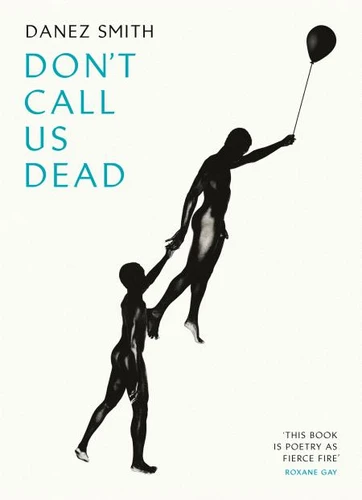
Don't Call Us Dead
Par :Formats :
Disponible dans votre compte client Decitre ou Furet du Nord dès validation de votre commande. Le format ePub protégé est :
- Compatible avec une lecture sur My Vivlio (smartphone, tablette, ordinateur)
- Compatible avec une lecture sur liseuses Vivlio
- Pour les liseuses autres que Vivlio, vous devez utiliser le logiciel Adobe Digital Edition. Non compatible avec la lecture sur les liseuses Kindle, Remarkable et Sony
- Non compatible avec un achat hors France métropolitaine
 , qui est-ce ?
Notre partenaire de plateforme de lecture numérique où vous retrouverez l'ensemble de vos ebooks gratuitement
Pour en savoir plus sur nos ebooks, consultez notre aide en ligne ici
C'est si simple ! Lisez votre ebook avec l'app Vivlio sur votre tablette, mobile ou ordinateur :

- Nombre de pages112
- FormatePub
- ISBN978-1-4735-4917-3
- EAN9781473549173
- Date de parution18/01/2018
- Protection num.Adobe DRM
- Infos supplémentairesepub
- ÉditeurVintage Digital
Résumé
*WINNER OF THE FORWARD PRIZE FOR BEST COLLECTION 2018**A Finalist for the National Book Award for Poetry 2017**A Financial Times and Telegraph Book of the Year 2018*'[Smith's] poems are enriched to the point of volatility, but they pay out, often, in sudden joy' The New Yorker Award-winning poet Danez Smith is a ground-breaking force, celebrated for deft lyrics, urgent subjects, and performative power.
Don't Call Us Dead opens with a heartrending sequence that imagines an afterlife for black men shot by police, a place where suspicion, violence, and grief are forgotten and replaced with the safety, love and longevity they deserved here on earth. Smith turns then to desire, mortality - the dangers experienced in skin and body and blood - and an HIV-positive diagnosis. 'Some of us are killed / in pieces, ' Smith writes, 'some of us all at once.' Don't Call Us Dead is an astonishing and ambitious collection, one that confronts, praises, and rebukes an America where every day is too often a funeral and not often enough a miracle.
Don't Call Us Dead opens with a heartrending sequence that imagines an afterlife for black men shot by police, a place where suspicion, violence, and grief are forgotten and replaced with the safety, love and longevity they deserved here on earth. Smith turns then to desire, mortality - the dangers experienced in skin and body and blood - and an HIV-positive diagnosis. 'Some of us are killed / in pieces, ' Smith writes, 'some of us all at once.' Don't Call Us Dead is an astonishing and ambitious collection, one that confronts, praises, and rebukes an America where every day is too often a funeral and not often enough a miracle.
A propos de Danez Smith
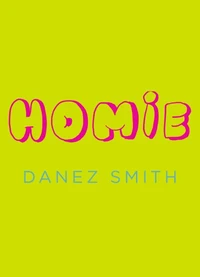
Homie
E-book
9,49 €