
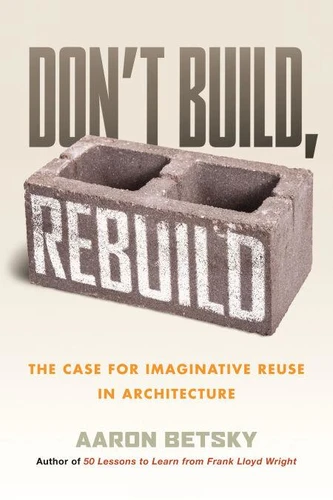
Don't Build, Rebuild
Par :Formats :
Disponible dans votre compte client Decitre ou Furet du Nord dès validation de votre commande. Le format ePub protégé est :
- Compatible avec une lecture sur My Vivlio (smartphone, tablette, ordinateur)
- Compatible avec une lecture sur liseuses Vivlio
- Pour les liseuses autres que Vivlio, vous devez utiliser le logiciel Adobe Digital Edition. Non compatible avec la lecture sur les liseuses Kindle, Remarkable et Sony
- Non compatible avec un achat hors France métropolitaine
 , qui est-ce ?
Notre partenaire de plateforme de lecture numérique où vous retrouverez l'ensemble de vos ebooks gratuitement
Pour en savoir plus sur nos ebooks, consultez notre aide en ligne ici
C'est si simple ! Lisez votre ebook avec l'app Vivlio sur votre tablette, mobile ou ordinateur :

- Nombre de pages232
- FormatePub
- ISBN978-0-8070-1487-5
- EAN9780807014875
- Date de parution05/11/2024
- Protection num.Adobe DRM
- Taille24 Mo
- Infos supplémentairesepub
- ÉditeurBeacon Press
Résumé
In a time of climate crisis and housing shortages, a bold, visionary call to replace current wasteful construction practices with an architecture of reuseAs climate change has escalated into a crisis, the reuse of existing structures is the only way to even begin to preserve our wood, sand, silicon, and iron, let alone stop belching carbon monoxide into the air. Our housing crisis means that we need usable buildings now more than ever, but architect and critic Aaron Betsky shows that new construction-often seeking to maximize profits rather than resources, often soulless in its feel-is not the answer.
Whenever possible, it is better to repair, recycle, renovate, and reuse-not only from an environmental perspective, but culturally and artistically as well. Architectural reuse is as old as civilization itself. In the streets of Europe, you can find fragments from the Roman Empire. More recently, marginalized communities from New York to Detroit-queer people looking for places to gather or cruise, punks looking to make loud music, artists and displaced people looking for space to work and live-have taken over industrial spaces created then abandoned by capitalism, forging a unique style in the process.
Their methods-from urban mining to dumpster diving-now inform architects transforming old structures today. Betsky shows us contemporary imaginative reuse throughout the world: the Mexican housing authority transforming concrete slums into well-serviced apartments; the MassMOCA museum, built out of old textile mills; the squatted city of Christiana in Copenhagen, fashioned from an old army base; Project Heidelberg in Detroit.
All point towards a new circular economy of reuse, built from the ashes of the capitalist economy of consumption.
Whenever possible, it is better to repair, recycle, renovate, and reuse-not only from an environmental perspective, but culturally and artistically as well. Architectural reuse is as old as civilization itself. In the streets of Europe, you can find fragments from the Roman Empire. More recently, marginalized communities from New York to Detroit-queer people looking for places to gather or cruise, punks looking to make loud music, artists and displaced people looking for space to work and live-have taken over industrial spaces created then abandoned by capitalism, forging a unique style in the process.
Their methods-from urban mining to dumpster diving-now inform architects transforming old structures today. Betsky shows us contemporary imaginative reuse throughout the world: the Mexican housing authority transforming concrete slums into well-serviced apartments; the MassMOCA museum, built out of old textile mills; the squatted city of Christiana in Copenhagen, fashioned from an old army base; Project Heidelberg in Detroit.
All point towards a new circular economy of reuse, built from the ashes of the capitalist economy of consumption.