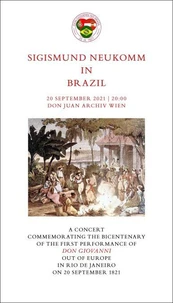
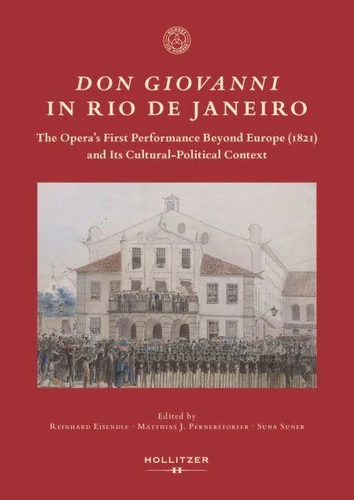
On 29 November 1807, on the eve before Napoleon's army occupied Lisbon, the Portuguese court set sail for Brazil. Rio de Janeiro became the new capital of the Império Português, which led to profound social and cultural transformations in the city and a redefinition of the colony's political framework. Five months before the premiere of Da Ponte's and Mozart's Don Giovanni on 20 September 1821, King John VI returned to Lisbon, appointing his son Pedro as Prince Regent.
Pedro remained in Brazil with his wife, Leopoldina, the daughter of Emperor Francis I. Little more than a year later, on 2 September 1822, under the presidency of Pedro's wife Leopoldina, the Council of State approved Brazil's secession from Portugal, paving the way for independence and the rise of a new empire.
Against this historical background, this volume traces the development of opera in Brazil from the mid-eighteenth century to the reign of Emperor Pedro I, situating it within its wider cultural and political context.
The analysis of the 1821 Rio premiere of Don Giovanni is complemented by examinations of the work's subsequent American debuts in Buenos Aires (1827) and Mexico City (1828).
On 29 November 1807, on the eve before Napoleon's army occupied Lisbon, the Portuguese court set sail for Brazil. Rio de Janeiro became the new capital of the Império Português, which led to profound social and cultural transformations in the city and a redefinition of the colony's political framework. Five months before the premiere of Da Ponte's and Mozart's Don Giovanni on 20 September 1821, King John VI returned to Lisbon, appointing his son Pedro as Prince Regent.
Pedro remained in Brazil with his wife, Leopoldina, the daughter of Emperor Francis I. Little more than a year later, on 2 September 1822, under the presidency of Pedro's wife Leopoldina, the Council of State approved Brazil's secession from Portugal, paving the way for independence and the rise of a new empire.
Against this historical background, this volume traces the development of opera in Brazil from the mid-eighteenth century to the reign of Emperor Pedro I, situating it within its wider cultural and political context.
The analysis of the 1821 Rio premiere of Don Giovanni is complemented by examinations of the work's subsequent American debuts in Buenos Aires (1827) and Mexico City (1828).

 , qui est-ce ?