
Peter Ackroyd is an award-winning novelist, as well as a broadcaster, biographer, poet and historian. He is the author of the acclaimed non-fiction bestsellers, Thames: Sacred River and London: The Biography, as well as the History of England series. He holds a CBE for services to literature and lives in London.
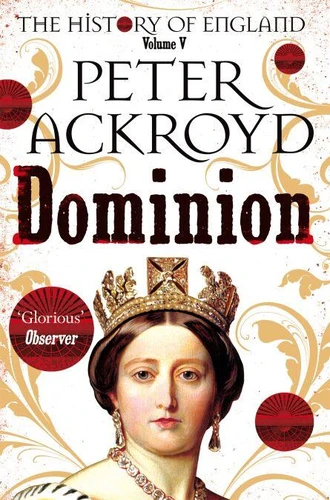
Dominion. The History of England Volume V
Par :Formats :
Disponible dans votre compte client Decitre ou Furet du Nord dès validation de votre commande. Le format ePub protégé est :
- Compatible avec une lecture sur My Vivlio (smartphone, tablette, ordinateur)
- Compatible avec une lecture sur liseuses Vivlio
- Pour les liseuses autres que Vivlio, vous devez utiliser le logiciel Adobe Digital Edition. Non compatible avec la lecture sur les liseuses Kindle, Remarkable et Sony
- Non compatible avec un achat hors France métropolitaine
 , qui est-ce ?
Notre partenaire de plateforme de lecture numérique où vous retrouverez l'ensemble de vos ebooks gratuitement
Pour en savoir plus sur nos ebooks, consultez notre aide en ligne ici
C'est si simple ! Lisez votre ebook avec l'app Vivlio sur votre tablette, mobile ou ordinateur :

- Nombre de pages352
- FormatePub
- ISBN978-1-5098-8131-4
- EAN9781509881314
- Date de parution06/09/2018
- Protection num.Adobe DRM
- Infos supplémentairesepub
- ÉditeurPicador
Résumé
Uncover the intricate past of England in Peter Ackroyd's acclaimed volume, Dominion, a crucial part of his sweeping History of England series. This charismatic narrative opens with the aftermath of Waterloo in 1815 and concludes with the death of Queen Victoria in 1901. Ackroyd masterfully recounts the era of George IV, whose rule witnessed staunch resistance to reform, and that of 'Sailor King' William IV, an epoch which marked significant modernisation and the abolition of slavery.
When eighteen-year-old Queen Victoria's took the throne, a period of astonishing technological breakthroughs and innovation - such as steam railways and the telegraph. Yet, beneath the progress, Ackroyd unflinchingly reveals the harsh reality of the ordinary working classes mired in poverty whilst the industrial revolution flourishes around them. It was a time that saw a flowering of great literature, too.
As the Georgian era gave way to that of Victoria, readers could delight not only in the work of Byron, Shelley and Wordsworth but also the great nineteenth-century novelists: the Brontë sisters, George Eliot, Mrs Gaskell, Thackeray, and, of course, Dickens, whose work has become synonymous with Victorian England. Finally, Ackroyd illustrates the British Empire's global expansion, reflecting Britannia's iron rule over the waves, the shockwaves of which are still felt today.
When eighteen-year-old Queen Victoria's took the throne, a period of astonishing technological breakthroughs and innovation - such as steam railways and the telegraph. Yet, beneath the progress, Ackroyd unflinchingly reveals the harsh reality of the ordinary working classes mired in poverty whilst the industrial revolution flourishes around them. It was a time that saw a flowering of great literature, too.
As the Georgian era gave way to that of Victoria, readers could delight not only in the work of Byron, Shelley and Wordsworth but also the great nineteenth-century novelists: the Brontë sisters, George Eliot, Mrs Gaskell, Thackeray, and, of course, Dickens, whose work has become synonymous with Victorian England. Finally, Ackroyd illustrates the British Empire's global expansion, reflecting Britannia's iron rule over the waves, the shockwaves of which are still felt today.
A propos de Peter Ackroyd
Shakespeare
Poche
12,50 €
13,40 €
Chatterton
Grand Format
18,60 €

4/5
3,90 €

5/5
Les carnets de Victor Frankenstein - Occasion
Grand Format
11,55 €
3,87 €
20,99 €
3,99 €
Alfred Hitchcock
E-book
13,60 €
20,99 €
13,99 €
5/5
Londres. La biographie
E-book
9,99 €

Blitz
E-book
1,22 €

4/5
Trois frères
E-book
12,99 €
16,08 €