SOLDES
Jusqu'à -70% sur une sélection d'articles*

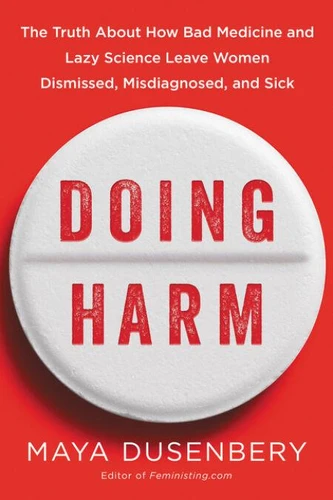
Doing Harm. The Truth About How Bad Medicine and Lazy Science Leave Women Dismissed, Misdiagnosed, and Sick
Par :Formats :
Disponible dans votre compte client Decitre ou Furet du Nord dès validation de votre commande. Le format ePub protégé est :
- Compatible avec une lecture sur My Vivlio (smartphone, tablette, ordinateur)
- Compatible avec une lecture sur liseuses Vivlio
- Pour les liseuses autres que Vivlio, vous devez utiliser le logiciel Adobe Digital Edition. Non compatible avec la lecture sur les liseuses Kindle, Remarkable et Sony
- Non compatible avec un achat hors France métropolitaine
 , qui est-ce ?
Notre partenaire de plateforme de lecture numérique où vous retrouverez l'ensemble de vos ebooks gratuitement
Pour en savoir plus sur nos ebooks, consultez notre aide en ligne ici
C'est si simple ! Lisez votre ebook avec l'app Vivlio sur votre tablette, mobile ou ordinateur :

- Nombre de pages320
- FormatePub
- ISBN978-0-06-247081-2
- EAN9780062470812
- Date de parution06/03/2018
- Protection num.Adobe DRM
- Infos supplémentairesepub
- ÉditeurHarperOne
Résumé
Editor of the award-winning site Feministing.com, Maya Dusenbery brings together scientific and sociological research, interviews with doctors and researchers, and personal stories from women across the country to provide the first comprehensive, accessible look at the widespread gender bias in healthcare and how sexism in medicine harms women today. In Doing Harm, Dusenbery explores the deep, systemic problems that underlie women's experiences of feeling dismissed by the medical system through a pattern of medical gaslighting.
Women have been discharged from the emergency room mid-heart attack with a prescription for anti-anxiety meds, while others with autoimmune diseases have been labeled "chronic complainers" for years before being properly diagnosed. Women with endometriosis have been told they are just overreacting to "normal" menstrual cramps, while still others have "contested" illnesses like chronic fatigue syndrome and fibromyalgia that, dogged by psychosomatic suspicions, have yet to be fully accepted as "real" diseases by the whole of the profession.
An eye-opening read for patients and health care providers alike, Doing Harm shows how women suffer from two invisible problems: a knowledge gap, where the medical community knows relatively less about their diseases, and a trust gap, where it too often doesn't believe their reports of their symptoms. The research community has neglected conditions that disproportionately affect women and paid little attention to biological differences between the sexes in everything from drug metabolism to the symptoms of heart disease in women.
Meanwhile, a long history of viewing women as especially prone to "hysteria" reverberates to the present day, leaving women battling against a stereotype that they're hypochondriacs whose ailments are likely to be "all in their heads."Offering a clear-eyed explanation of the root causes of this insidious and entrenched bias and laying out its sometimes catastrophic consequences, Doing Harm is a rallying wake-up call for patient advocacy that will change the way we look at health care for women. How does a medical system built for men fail half the population? Medical Misogyny: Uncover the history of 'hysteria' and see how the stereotype of women as unreliable narrators of their own symptoms continues to cause harm and misdiagnosis today.
Autoimmune Disease: Learn why conditions that disproportionately affect women, from lupus to rheumatoid arthritis, often take years to diagnose, with patients being dismissed as 'chronic complainers' along the way. Chronic Pain Conditions: Investigate why 'contested' illnesses like fibromyalgia and chronic fatigue syndrome are dogged by psychosomatic suspicion, leaving millions of women to suffer without answers.
Endometriosis and Pelvic Pain: Discover how the normalization of menstrual pain leads to devastating diagnostic delays for the millions suffering from endometriosis, who are told they are just overreacting.
Women have been discharged from the emergency room mid-heart attack with a prescription for anti-anxiety meds, while others with autoimmune diseases have been labeled "chronic complainers" for years before being properly diagnosed. Women with endometriosis have been told they are just overreacting to "normal" menstrual cramps, while still others have "contested" illnesses like chronic fatigue syndrome and fibromyalgia that, dogged by psychosomatic suspicions, have yet to be fully accepted as "real" diseases by the whole of the profession.
An eye-opening read for patients and health care providers alike, Doing Harm shows how women suffer from two invisible problems: a knowledge gap, where the medical community knows relatively less about their diseases, and a trust gap, where it too often doesn't believe their reports of their symptoms. The research community has neglected conditions that disproportionately affect women and paid little attention to biological differences between the sexes in everything from drug metabolism to the symptoms of heart disease in women.
Meanwhile, a long history of viewing women as especially prone to "hysteria" reverberates to the present day, leaving women battling against a stereotype that they're hypochondriacs whose ailments are likely to be "all in their heads."Offering a clear-eyed explanation of the root causes of this insidious and entrenched bias and laying out its sometimes catastrophic consequences, Doing Harm is a rallying wake-up call for patient advocacy that will change the way we look at health care for women. How does a medical system built for men fail half the population? Medical Misogyny: Uncover the history of 'hysteria' and see how the stereotype of women as unreliable narrators of their own symptoms continues to cause harm and misdiagnosis today.
Autoimmune Disease: Learn why conditions that disproportionately affect women, from lupus to rheumatoid arthritis, often take years to diagnose, with patients being dismissed as 'chronic complainers' along the way. Chronic Pain Conditions: Investigate why 'contested' illnesses like fibromyalgia and chronic fatigue syndrome are dogged by psychosomatic suspicion, leaving millions of women to suffer without answers.
Endometriosis and Pelvic Pain: Discover how the normalization of menstrual pain leads to devastating diagnostic delays for the millions suffering from endometriosis, who are told they are just overreacting.