
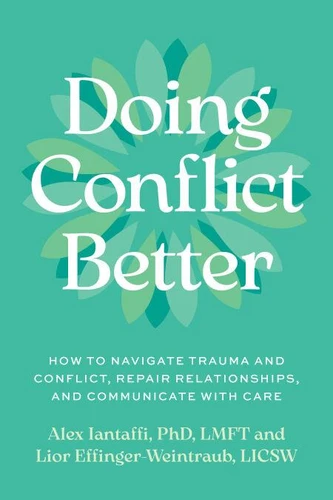
Doing Conflict Better. How to Navigate Trauma and Conflict, Repair Relationships, and Communicate with Care
Par : ,Formats :
Disponible dans votre compte client Decitre ou Furet du Nord dès validation de votre commande. Le format ePub protégé est :
- Compatible avec une lecture sur My Vivlio (smartphone, tablette, ordinateur)
- Compatible avec une lecture sur liseuses Vivlio
- Pour les liseuses autres que Vivlio, vous devez utiliser le logiciel Adobe Digital Edition. Non compatible avec la lecture sur les liseuses Kindle, Remarkable et Sony
- Non compatible avec un achat hors France métropolitaine
 , qui est-ce ?
Notre partenaire de plateforme de lecture numérique où vous retrouverez l'ensemble de vos ebooks gratuitement
Pour en savoir plus sur nos ebooks, consultez notre aide en ligne ici
C'est si simple ! Lisez votre ebook avec l'app Vivlio sur votre tablette, mobile ou ordinateur :

- Nombre de pages256
- Date de parution27/04/2027
- FormatePub
- ISBN8889844150
- EAN9798889844150
- Protection num.Adobe DRM
- Infos supplémentairesepub
- ÉditeurNorth Atlantic Books
Résumé
Trauma-informed prompts, exercises, and real-life examples: how to set better boundaries and have courageous conversations with the Conflict Intimacy framework An inclusive, gentle, and neurodivergent-affirming approachDo Conflict Better is an accessible, interactive handbook for understanding and working through conflict with care, awareness, and skill. Written by trauma therapists Alex Iantaffi and Lior Effinger-Weintraub, this book shows how conflict is a natural, inevitable part of life.
And it doesn't need to be feared, avoided, shamed, or shut down: when we do it well, conflict can strengthen our relationships, transform our communication, and grow our agency for the better. The authors show us how we bring our trauma into our conflicts...sometimes without realizing it. They unpack how different kinds of trauma-like individual, collective, and intergenerational trauma-shape how we show up to moments of disagreement and tension in all areas of our life, from our most personal and intimate relationships to our work spheres.
Organized into three sections on Trauma, Conflict, and Communication, Do Conflict Better teaches how: Nervous system responses like fight, flight, freeze, and fawn impact our ability to hold healthy conflict To develop the critical skill of "conflict intimacy" to channel disagreement, deepen trust, and nurture connection To set better boundaries, navigate shame, and engage in courageous conversations Community-based and restorative approaches to justice can lead to genuine accountability Trauma intersects with different neurotypes Do Conflict Better takes a trauma-sensitive tone, written in language that intentionally nurtures a safer, less triggering reading experience than other books about conflict.
With user-friendly prompts, exercises, and self-care activities, this book empowers us to move from avoidant and reactive conflict styles toward more intentional, compassionate, and authentic ways of relating.
And it doesn't need to be feared, avoided, shamed, or shut down: when we do it well, conflict can strengthen our relationships, transform our communication, and grow our agency for the better. The authors show us how we bring our trauma into our conflicts...sometimes without realizing it. They unpack how different kinds of trauma-like individual, collective, and intergenerational trauma-shape how we show up to moments of disagreement and tension in all areas of our life, from our most personal and intimate relationships to our work spheres.
Organized into three sections on Trauma, Conflict, and Communication, Do Conflict Better teaches how: Nervous system responses like fight, flight, freeze, and fawn impact our ability to hold healthy conflict To develop the critical skill of "conflict intimacy" to channel disagreement, deepen trust, and nurture connection To set better boundaries, navigate shame, and engage in courageous conversations Community-based and restorative approaches to justice can lead to genuine accountability Trauma intersects with different neurotypes Do Conflict Better takes a trauma-sensitive tone, written in language that intentionally nurtures a safer, less triggering reading experience than other books about conflict.
With user-friendly prompts, exercises, and self-care activities, this book empowers us to move from avoidant and reactive conflict styles toward more intentional, compassionate, and authentic ways of relating.
A propos de Alex Iantaffi


8,90 €