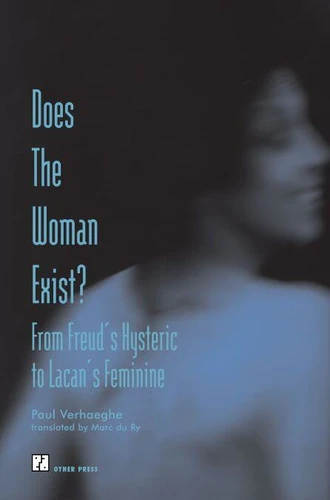
Does the Woman Exist?. From Freud's Hysteric to Lacan's Feminine
Par : ,Formats :
Disponible dans votre compte client Decitre ou Furet du Nord dès validation de votre commande. Le format ePub protégé est :
- Compatible avec une lecture sur My Vivlio (smartphone, tablette, ordinateur)
- Compatible avec une lecture sur liseuses Vivlio
- Pour les liseuses autres que Vivlio, vous devez utiliser le logiciel Adobe Digital Edition. Non compatible avec la lecture sur les liseuses Kindle, Remarkable et Sony
- Non compatible avec un achat hors France métropolitaine
 , qui est-ce ?
Notre partenaire de plateforme de lecture numérique où vous retrouverez l'ensemble de vos ebooks gratuitement
Pour en savoir plus sur nos ebooks, consultez notre aide en ligne ici
C'est si simple ! Lisez votre ebook avec l'app Vivlio sur votre tablette, mobile ou ordinateur :

- Nombre de pages300
- FormatePub
- ISBN978-1-59051-671-3
- EAN9781590516713
- Date de parution16/04/2013
- Protection num.Adobe DRM
- Taille3 Mo
- Infos supplémentairesepub
- ÉditeurOther Press
Résumé
This book describes how Freud attempted to chart hysteria, yet came to a standstill at the problem of woman and her desire, and of how Lacan continued along this road by creating new conceptual tools. The difficulties and upsets encountered by both men are examined. This lucid presentation of the dialectical process that carries Lacan through the evolution of Freud's thought offers profound insights into the place of the "feminine mystique" in our social fabric.
Patiently and carefully, Verhaeghe applies the Lacanian grid to Freud's text and succeeds in explaining Lacan's formulations without merely recapitulating his theories. The reader is informed, along the way, not only of Lacan's take on Freudian ideas, but also of the array of interpretations emerging from other trends in post-Freudian literature, including feminist revisionism.
Patiently and carefully, Verhaeghe applies the Lacanian grid to Freud's text and succeeds in explaining Lacan's formulations without merely recapitulating his theories. The reader is informed, along the way, not only of Lacan's take on Freudian ideas, but also of the array of interpretations emerging from other trends in post-Freudian literature, including feminist revisionism.