SOLDES
Jusqu'à -70% sur une sélection d'articles*

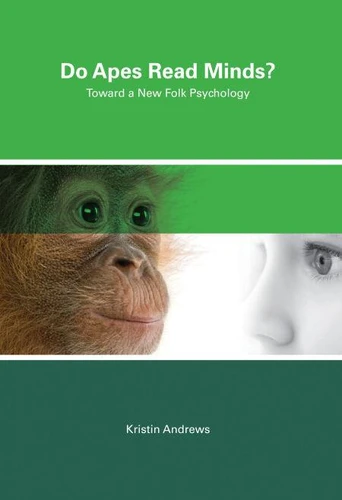
Do Apes Read Minds?. Toward a New Folk Psychology
Par :Formats :
Disponible dans votre compte client Decitre ou Furet du Nord dès validation de votre commande. Le format ePub protégé est :
- Compatible avec une lecture sur My Vivlio (smartphone, tablette, ordinateur)
- Compatible avec une lecture sur liseuses Vivlio
- Pour les liseuses autres que Vivlio, vous devez utiliser le logiciel Adobe Digital Edition. Non compatible avec la lecture sur les liseuses Kindle, Remarkable et Sony
- Non compatible avec un achat hors France métropolitaine
 , qui est-ce ?
Notre partenaire de plateforme de lecture numérique où vous retrouverez l'ensemble de vos ebooks gratuitement
Pour en savoir plus sur nos ebooks, consultez notre aide en ligne ici
C'est si simple ! Lisez votre ebook avec l'app Vivlio sur votre tablette, mobile ou ordinateur :

- Nombre de pages312
- FormatePub
- ISBN978-0-262-30483-2
- EAN9780262304832
- Date de parution20/07/2012
- Protection num.Adobe DRM
- Taille331 Ko
- Infos supplémentairesepub
- ÉditeurThe MIT Press
Résumé
An argument that as folk psychologists humans (and perhaps other animals) don't so much read minds as see one another as persons with traits, emotions, and social relations. By adulthood, most of us have become experts in human behavior, able to make sense of the myriad behaviors we find in environments ranging from the family home to the local mall and beyond. In philosophy of mind, our understanding of others has been largely explained in terms of knowing others' beliefs and desires; describing others' behavior in these terms is the core of what is known as folk psychology.
In Do Apes Read Minds? Kristin Andrews challenges this view of folk psychology, arguing that we don't consider others' beliefs and desires when predicting most quotidian behavior, and that our explanations in these terms are often inaccurate or unhelpful. Rather than mindreading, or understanding others as receptacles for propositional attitudes, Andrews claims that folk psychologists see others first as whole persons with traits, emotions, and social relations.
Drawing on research in developmental psychology, social psychology, and animal cognition, Andrews argues for a pluralistic folk psychology that employs different kinds of practices (including prediction, explanation, and justification) and different kinds of cognitive tools (including personality trait attribution, stereotype activation, inductive reasoning about past behavior, and generalization from self) that are involved in our folk psychological practices.
According to this understanding of folk psychology-which does not require the sophisticated cognitive machinery of second-order metacognition associated with having a theory of mind-animals (including the other great apes) may be folk psychologists, too.
In Do Apes Read Minds? Kristin Andrews challenges this view of folk psychology, arguing that we don't consider others' beliefs and desires when predicting most quotidian behavior, and that our explanations in these terms are often inaccurate or unhelpful. Rather than mindreading, or understanding others as receptacles for propositional attitudes, Andrews claims that folk psychologists see others first as whole persons with traits, emotions, and social relations.
Drawing on research in developmental psychology, social psychology, and animal cognition, Andrews argues for a pluralistic folk psychology that employs different kinds of practices (including prediction, explanation, and justification) and different kinds of cognitive tools (including personality trait attribution, stereotype activation, inductive reasoning about past behavior, and generalization from self) that are involved in our folk psychological practices.
According to this understanding of folk psychology-which does not require the sophisticated cognitive machinery of second-order metacognition associated with having a theory of mind-animals (including the other great apes) may be folk psychologists, too.