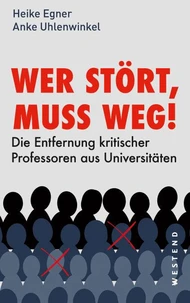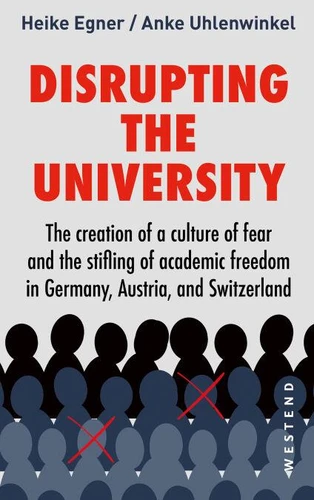



Heike Egner, geboren 1963 in Heidelberg, ist Geographin, freie Wissenschaftlerin und Mediatorin. Sie absolvierte ein Studium der Publizistik, Politikwissenschaft und Geografie in Mainz, wo auch ihre Promotion und Habilitation in Geografie erfolgten. Egner besetzte Vertretungs- und Gastprofessuren in Frankfurt am Main, Kassel, München, Wien, und Innsbruck. Von 2010 bis 2018 war sie Universitätsprofessorin für Geografie und Regionalforschung an der Universität Klagenfurt, wo sie 2018 überraschend entlassen wurde.
Anke Uhlenwinkel, geboren 1963 in Bremen, ist seit 2021 Universitätsprofessorin für Didaktik der Geografie und Wirtschaftskunde an der Paris Lodron Universität Salzburg.
Sie absolvierte ein Studium der Geografie, Anglistik, Politik und Pädagogik an der Georg-August-Universität Göttingen. Ihre Promotion und Habilitation erfolgten an der Universität Bremen. Ab 2008 besetzte sie eine Professur für Geografiedidaktik an der Universität Potsdam, wo sie 2013 mithilfe eines im Hochschulgesetz nicht kodifizierten Verfahrens nicht entfristet wurde. Zachary Gallant, Autor von Nazis All The Way Down: The Myth of the Moral Modern Germany, berichtete als Journalist über Politik und Korruption in den USA und auf dem Balkan.
Er lebt seit 2012 in Deutschland, wo er mit Unterstützung der Europäischen Kommission und des Bundesamts für Migration und Flüchtlinge zahlreiche Projekte zu Flüchtlingshilfe, interkultureller Verständigung und Klimagerechtigkeit durchgeführt und organisiert hat.
Sie absolvierte ein Studium der Geografie, Anglistik, Politik und Pädagogik an der Georg-August-Universität Göttingen. Ihre Promotion und Habilitation erfolgten an der Universität Bremen. Ab 2008 besetzte sie eine Professur für Geografiedidaktik an der Universität Potsdam, wo sie 2013 mithilfe eines im Hochschulgesetz nicht kodifizierten Verfahrens nicht entfristet wurde. Zachary Gallant, Autor von Nazis All The Way Down: The Myth of the Moral Modern Germany, berichtete als Journalist über Politik und Korruption in den USA und auf dem Balkan.
Er lebt seit 2012 in Deutschland, wo er mit Unterstützung der Europäischen Kommission und des Bundesamts für Migration und Flüchtlinge zahlreiche Projekte zu Flüchtlingshilfe, interkultureller Verständigung und Klimagerechtigkeit durchgeführt und organisiert hat.