SOLDES
Jusqu'à -70% sur une sélection d'articles*

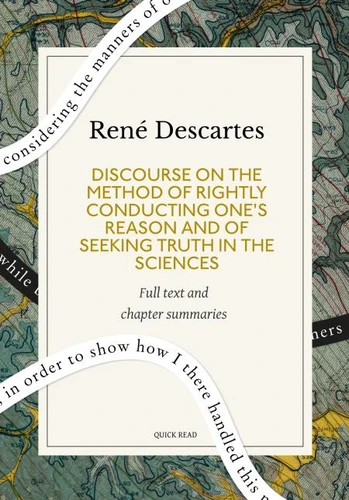
Discourse on the Method of Rightly Conducting One's Reason and of Seeking Truth in the Sciences: A Quick Read edition
Par : , ,Formats :
Disponible dans votre compte client Decitre ou Furet du Nord dès validation de votre commande. Le format Multi-format est :
- Pour les liseuses autres que Vivlio, vous devez utiliser le logiciel Adobe Digital Edition. Non compatible avec la lecture sur les liseuses Kindle, Remarkable et Sony
 , qui est-ce ?
Notre partenaire de plateforme de lecture numérique où vous retrouverez l'ensemble de vos ebooks gratuitement
Pour en savoir plus sur nos ebooks, consultez notre aide en ligne ici
C'est si simple ! Lisez votre ebook avec l'app Vivlio sur votre tablette, mobile ou ordinateur :

- FormatMulti-format
- ISBN978-2-38582-027-5
- EAN9782385820275
- Date de parution16/02/2024
- Protection num.pas de protection
- Infos supplémentairesMulti-Format
- ÉditeurQuick Read
Résumé
Discover a new way to read classics with Quick Read.
This Quick Read edition includes both the full text and a summary for each chapter.
- Reading time of the complete text: about 2 hours
- Reading time of the summarized text: 6 minutes
The Discourse on the Method is a philosophical and autobiographical treatise published by René Descartes in 1637. It is best known for the famous quotation "Je pense, donc je suis" ("I think, therefore I am").
The book is divided into six parts, and in it, Descartes tackles the problem of skepticism by doubting everything to assess the world from a fresh perspective. He presents four precepts for arriving at knowledge, including never accepting anything for true that is not clearly known to be such. Descartes also discusses morals and maxims for conducting the method, including obeying the laws and customs of one's country.
In Part IV, he provides three different proofs for the existence of God and the soul. The method of profound skepticism is considered to be the start of modern philosophy. Descartes' work influenced future science and is important to the development of natural sciences.
The book is divided into six parts, and in it, Descartes tackles the problem of skepticism by doubting everything to assess the world from a fresh perspective. He presents four precepts for arriving at knowledge, including never accepting anything for true that is not clearly known to be such. Descartes also discusses morals and maxims for conducting the method, including obeying the laws and customs of one's country.
In Part IV, he provides three different proofs for the existence of God and the soul. The method of profound skepticism is considered to be the start of modern philosophy. Descartes' work influenced future science and is important to the development of natural sciences.
A propos de Quick Read


4,99 €
4,99 €

4,99 €

4,99 €


4,99 €

4,99 €

4,99 €

4,99 €

4,99 €

4,99 €

4,99 €


4,99 €


4,99 €

4,99 €

4,99 €