SOLDES
Jusqu'à -70% sur une sélection d'articles*

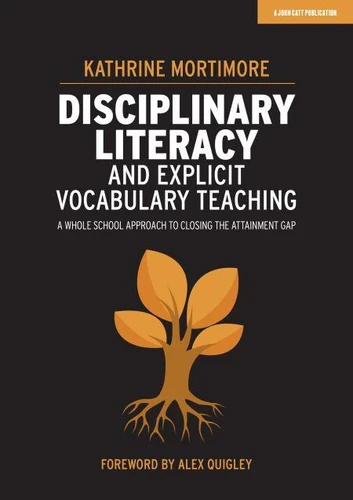
Disciplinary Literacy and Explicit Vocabulary Teaching: A whole school approach to closing the attainment gap
Par :Formats :
Disponible dans votre compte client Decitre ou Furet du Nord dès validation de votre commande. Le format ePub protégé est :
- Compatible avec une lecture sur My Vivlio (smartphone, tablette, ordinateur)
- Compatible avec une lecture sur liseuses Vivlio
- Pour les liseuses autres que Vivlio, vous devez utiliser le logiciel Adobe Digital Edition. Non compatible avec la lecture sur les liseuses Kindle, Remarkable et Sony
- Non compatible avec un achat hors France métropolitaine
 , qui est-ce ?
Notre partenaire de plateforme de lecture numérique où vous retrouverez l'ensemble de vos ebooks gratuitement
Pour en savoir plus sur nos ebooks, consultez notre aide en ligne ici
C'est si simple ! Lisez votre ebook avec l'app Vivlio sur votre tablette, mobile ou ordinateur :

- Nombre de pages204
- FormatePub
- ISBN978-1-913808-89-1
- EAN9781913808891
- Date de parution14/12/2020
- Protection num.Adobe DRM
- Infos supplémentairesepub
- ÉditeurJohn Catt
Résumé
Firmly rooted in research evidence of what works within the classroom for our most disadvantaged students, Disciplinary Literacy and Explicit Vocabulary Teaching offers teachers and school leaders practical ways in which those students who are behind in their literacy capabilities can make excellent progress. Building on the work of Geoff Barton in his influential book Don't Call it Literacy, Kathrine Mortimore outlines the unique literacy challenges posed by specific subject areas for those with weaker literacy skills, and more importantly how these challenges can be addressed and overcome.
A student's GCSE results are vital in giving them the choices they deserve in order to go on to the next stage of their academic careers. This book draws on the success stories of schools and subjects that have made significant improvements in the outcomes of the children they teach, regardless of their starting points. From the inevitable success of Michaela Community school, to the gains made by the English department at Torquay Academy and the rapid reading improvements at Henley Bank, this book draws on both whole school initiatives and subject-specific strategies which have had proven success.
This book places a wide and balanced knowledge-rich curriculum at the centre of any school improvement strategy designed to improve literacy, and illustrates the role that all subjects must combine to play in building the vital background knowledge and vocabulary that young people need in order to read independently. This curriculum must then be delivered using those teaching methods that have had the greatest impact on disadvantaged learners, and this book sets out how the methodology of direct and explicit instruction can be adopted within each subject area.
Alongside this is a useful summary of staff development and inset which offers practical ways in which teachers' adoption of these effective strategies can be facilitated. There are also useful sections on creating a whole school dictionary of essential vocabulary, creating a culture of reading and writing, and also those key literacy barriers experienced by those students with some of the most common special educational needs.
A student's GCSE results are vital in giving them the choices they deserve in order to go on to the next stage of their academic careers. This book draws on the success stories of schools and subjects that have made significant improvements in the outcomes of the children they teach, regardless of their starting points. From the inevitable success of Michaela Community school, to the gains made by the English department at Torquay Academy and the rapid reading improvements at Henley Bank, this book draws on both whole school initiatives and subject-specific strategies which have had proven success.
This book places a wide and balanced knowledge-rich curriculum at the centre of any school improvement strategy designed to improve literacy, and illustrates the role that all subjects must combine to play in building the vital background knowledge and vocabulary that young people need in order to read independently. This curriculum must then be delivered using those teaching methods that have had the greatest impact on disadvantaged learners, and this book sets out how the methodology of direct and explicit instruction can be adopted within each subject area.
Alongside this is a useful summary of staff development and inset which offers practical ways in which teachers' adoption of these effective strategies can be facilitated. There are also useful sections on creating a whole school dictionary of essential vocabulary, creating a culture of reading and writing, and also those key literacy barriers experienced by those students with some of the most common special educational needs.